What to Expect the Night Before School Starts: Preparing Your Child With Autism
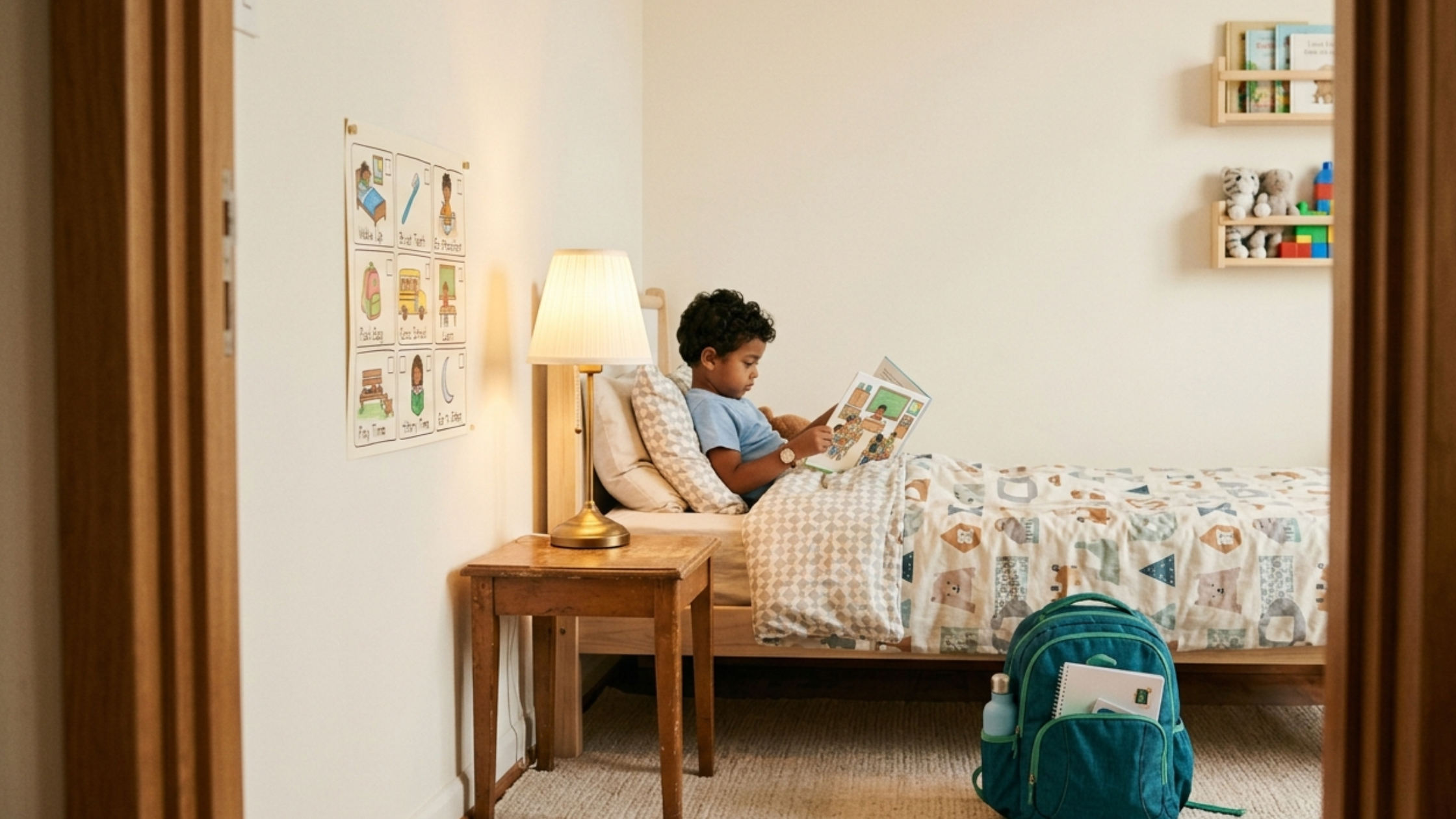
Tomorrow is the first day of school. Tonight matters more than most parents realise.
The evening before school starts sets the physiological and emotional conditions your child will wake up with tomorrow morning. A calm, predictable, well-structured evening means a child who goes to sleep regulated and wakes up with capacity. A chaotic, anxious, disrupted evening means a child who starts the first day of school already depleted before they have even left the house.
This guide walks you through what to expect tonight and exactly what to do with it.
Expect Some Version of Anxiety to Show Up
Almost every child with autism shows some form of heightened anxiety the night before school starts. It may look different from child to child. Some become more rigid and controlling about small things. Some ask the same questions on repeat. Some become unusually clingy. Some go very quiet and seem to retreat inside themselves. Some have a meltdown that seems disproportionate to whatever triggered it.
All of these are the same thing wearing different faces. Anticipatory anxiety about a significant transition.
Knowing this in advance means you are not caught off guard when it happens. You can meet it with calm recognition rather than alarm or frustration. This is anxiety about tomorrow. That makes sense. Let us help you settle.
Do Not Introduce Anything New Tonight
Tonight is not the night for a new bedtime story, a different dinner, a changed routine, or a conversation about new expectations for the school year. Every variable you can keep the same as usual reduces the overall load on your child's nervous system.
Familiar dinner. Familiar bath or shower routine if that is part of your evening. Familiar pyjamas. Familiar bedtime sequence in the usual order. The more tonight feels like every other evening, the lower the baseline anxiety your child carries into sleep.
Run Through the Morning Plan Once Clearly and Calmly
At some point during the evening, ideally not right before bed, go through tomorrow morning clearly and simply with your child. Not in a big production. Just a calm, matter-of-fact walk through what is going to happen.
Tomorrow we are going to wake up at seven. We will have breakfast, get dressed, and then drive to school. Your teacher is called Mrs Ahmed. You will find your name on a desk and sit down. I will pick you up at three fifteen from the front gate.
Concrete. Specific. Calm. Brief. Answer any questions that come up with the same tone. Then move on. Do not labour it or revisit it multiple times. One clear run-through is enough.
Pack the Bag Together Tonight if You Have Not Already
If the school bag is not already packed, do it together tonight as part of the evening routine. Let your child place each item in the bag themselves while you name what it is and what it is for.
When the bag is packed, close it and put it by the front door. The act of doing this together, and seeing it sitting ready, gives many children a concrete sense of preparedness that reduces overnight anxiety. Everything is ready. There is nothing left to forget.
Protect Bedtime
Whatever time your child normally goes to sleep, tonight it needs to happen on time or slightly earlier. Not later.
The temptation on the night before a big day is to let things run long because the child is wound up and not settling easily. Resist this. Keeping them up later does not reduce the anxiety. It just means they face tomorrow exhausted on top of anxious.
Stick to the usual bedtime routine as closely as possible. The same sequence of steps, the same ending, the same words. If your child uses a visual bedtime routine, follow it. If they have a specific sensory comfort object or routine that helps them settle, make sure it is available tonight.
Expect Settling to Take Longer Than Usual
Even with a calm evening and a consistent routine, many children with autism take longer to fall asleep the night before school starts. Their nervous system is activated. Their mind is running through tomorrow.
Do not fight this. Sit with them a little longer if that helps. Use a low, calm voice. Keep the room dark and quiet. If your child responds well to a weighted blanket or a specific sensory input before sleep, use it tonight.
The goal is not to force sleep quickly. It is to create the conditions where sleep can come when the nervous system is ready.
Look After Your Own Regulation Tonight
Your child's nervous system is highly attuned to yours. If you are anxious, tense, or visibly worried about tomorrow, that signal reaches your child regardless of what you say or do not say.
Whatever you need to do tonight to stay regulated, do it. Talk to your partner. Write down your worries somewhere private. Remind yourself of what you have already done to prepare your child and trust that it was enough. Your calm is one of the most powerful tools your child has access to tonight.
Tomorrow Morning
Wake up a little earlier than you think you need to. Have everything ready before you wake your child. Be calm, warm and matter of fact when you greet them. Follow the routine you have been building all week.
And when you leave them at the gate, if it is hard, let it be hard. Then trust the work you have done.
If you have concerns about your child's development, consult our BCBA or your pediatrician.