What to Do When Your Child With Autism Has a Meltdown on the First Day of School
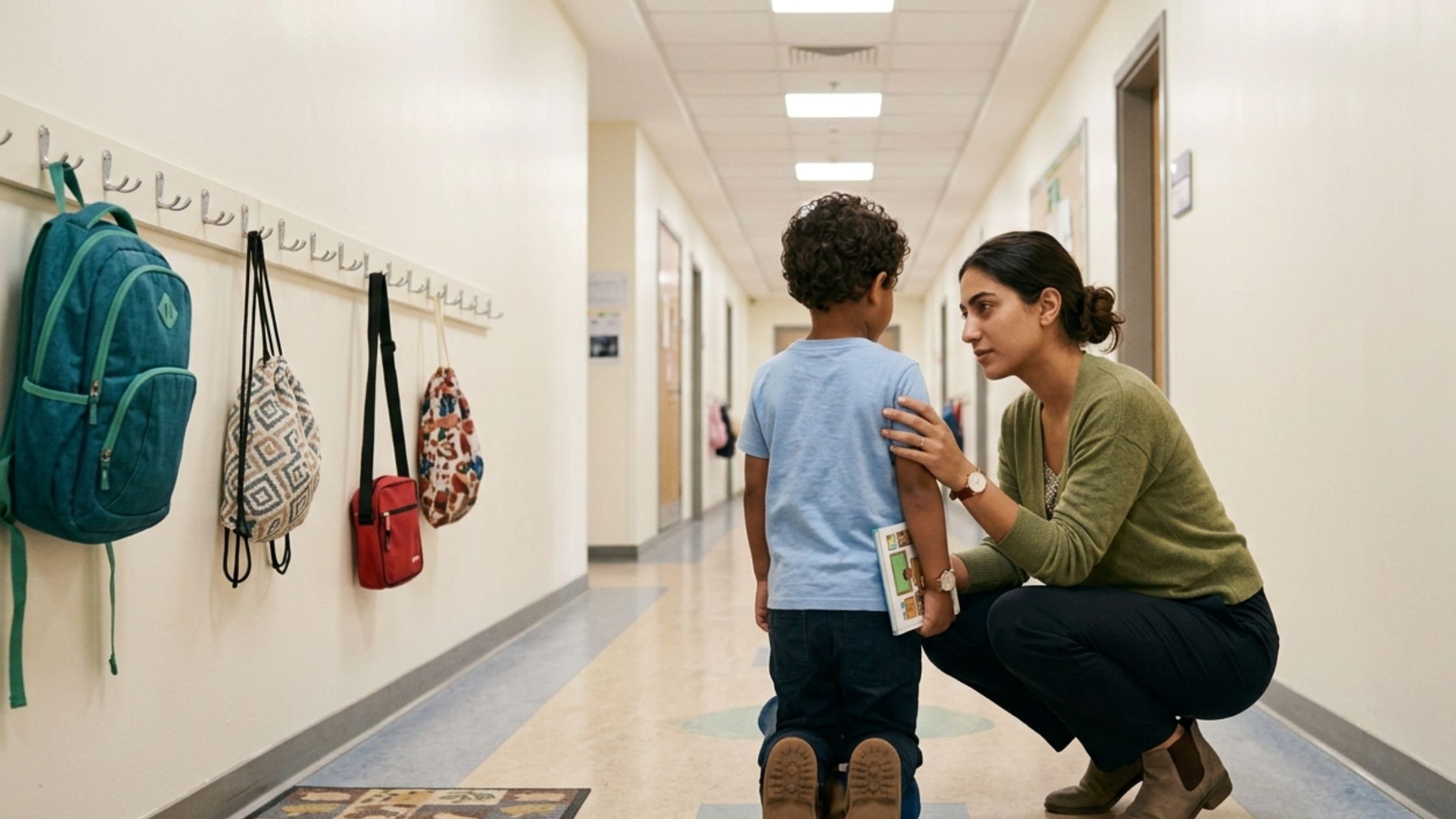
Today is the first day of school. You have prepared. You packed the bag last night. You ran through the morning routine. You drove to school calmly and talked through what was going to happen.
And then, somewhere between the car park and the classroom door, it fell apart.
If this is where you are right now, or if you are reading this because you want to be prepared before it happens, this guide is for you.
First: This Does Not Mean the Year Is Ruined
A meltdown on the first day of school is not a sign that your preparation failed, that your child cannot manage school, or that this year is going to be as hard as the worst ones. It is a sign that the transition from summer to school is a significant demand on your child's nervous system. Which it is. For most children with autism it is one of the biggest transitions of the year.
One hard morning does not predict the term. What matters most right now is how you respond in the next few minutes.
Step One: Get Safe and Get Quiet
Your first priority is safety. Make sure your child is not going to hurt themselves or anyone else. If they are in a corridor or a busy entrance, try to move them gently to somewhere less stimulating. A quieter corner, a side room, outside if that is calmer. Less noise, less visual input, less people moving around them.
Do not try to reason with them yet. Do not explain that school is fine or that they need to calm down. A nervous system in crisis cannot process language or logic. Speaking too much right now adds input to a system that is already overwhelmed.
Stay physically close. Crouch down to their level. Keep your voice low and your body still. You are not doing nothing. You are being the calm that their nervous system needs to co-regulate with.
Step Two: Reduce All Demands
While the meltdown is at its peak, remove every demand you can. Do not ask them to walk to the classroom. Do not ask them to stop crying. Do not ask them to tell you what is wrong. Do not tell them to use their words.
The only demand right now is the implicit one of your calm presence. Everything else waits.
This is the part that feels hardest for parents. It can feel like you are letting the situation spiral. You are not. You are giving your child's nervous system the conditions it needs to find its way back to regulation. That process cannot be rushed and it cannot be forced. It can only be supported.
Step Three: Give It Time
Meltdowns have a physiological arc. They peak and then they come down. The duration varies from child to child and situation to situation. Fighting the arc does not shorten it. It usually extends it.
Stay with your child. Keep the environment as calm and low-demand as possible. Wait.
When you start to notice the intensity decreasing, when the crying becomes quieter, when the body starts to soften, that is the beginning of recovery. It is not the moment to immediately reintroduce demands. It is the moment to offer warmth and connection before anything else.
A hand on the shoulder if your child tolerates touch. A quiet acknowledgement. That was really hard. You are okay. I am here.
Step Four: Decide Together What Happens Next
Once your child has genuinely returned to a regulated state, not just gone quiet from exhaustion, you face a decision about what happens next. Do they go into school? Do they go home? Is there a middle option?
There is no single right answer. It depends on your child, on how completely they have recovered, on what the school can offer in terms of a supported entry, and on your clinical read of the situation.
If the school has a learning support team or a quiet space where your child can transition in gradually rather than walking straight into a full classroom, that is usually the best option when it is available. A supported, gradual entry is often more successful than a delayed full entry or going home.
If your child is genuinely unable to regulate enough to be safely left, going home is not failure. It is a clinical decision. Come back tomorrow with a slightly adjusted plan.
What to Tell the School
Before you leave, speak briefly with whoever is responsible for your child's support. Tell them what happened, what seemed to trigger it, what helped and what did not. Ask what support is available for the rest of the day if your child does stay.
This conversation, however brief, starts the communication process that makes the rest of the term go better. A school that knows what happened and what helps is a school that is better equipped to support your child tomorrow and the day after.
What to Do When You Get Home or When the Day Ends
If your child went in, have the after-school decompression ready. Quiet space, preferred snack, no demands for at least thirty minutes. Do not process the morning immediately. Let them recover first.
If they came home, let the rest of today be calm and low-key. Do not talk about school repeatedly. Do not express worry in front of your child even if you feel it. Plan a small adjustment for tomorrow and go again.
How NeuroCore Can Help
If school entry is consistently a significant source of meltdown and distress for your child and you want clinical support in building a specific transition plan, our team is here to help.
If you have concerns about your child's development, consult our BCBA or your pediatrician.