How to Help Your Child With Autism Manage Back to School Anxiety
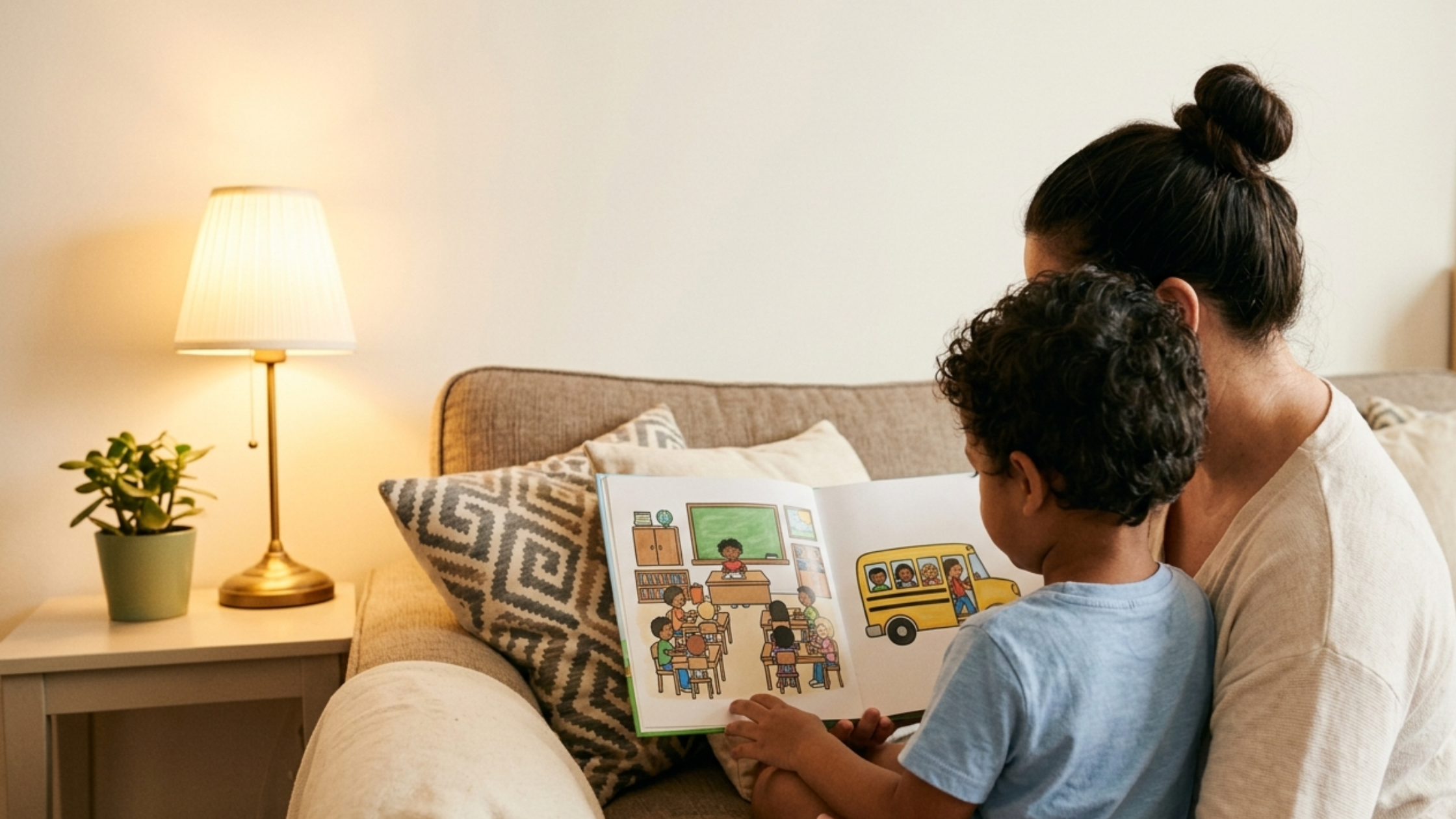
Anxiety before school starts is not unique to children with autism. Most children feel some version of it. But for children with autism, the anxiety tends to be more intense, more specific, and more likely to show up in ways that are hard to read if you do not know what you are looking for.
It might look like increased rigidity at home. More meltdowns than usual. Sleep that has suddenly become difficult. A child who was fine two weeks ago and is now asking the same questions about school on repeat every day. A child who goes completely quiet on the topic and refuses to discuss it at all.
All of these are anxiety. And anxiety before school starts, handled well in the days before 25th August, can make a significant difference to how the first week unfolds.
Understand What the Anxiety Is Actually About
Back to school anxiety in children with autism is almost never about school in a general sense. It is almost always about something specific. Something unknown. Something that changed. Something that happened last year that they are worried will happen again.
Your first job is to find out what it is.
This is harder than it sounds because many children with autism do not have reliable access to the language that describes internal emotional states. They may not be able to tell you they are anxious about who they will sit next to, or whether the classroom will be loud, or whether their old friend will be in their class this year.
You may need to do some detective work. Ask specific, concrete questions rather than open-ended ones. Are you worried about the classroom? Are you worried about who your teacher will be? Is it the lunchtime that feels hard? Are you thinking about what happened with the other children last year?
Specific questions give a child with limited emotional vocabulary somewhere to land. And when you find the specific thing, you can actually do something about it.
Answer Questions Honestly and Repeat the Answers
Some children with autism manage anxiety by asking the same question many times. What time does school start. Will you pick me up. What if I need the bathroom. What if I forget my bag.
The repetition can be exhausting for parents. But it is important to understand what it is. It is not attention-seeking. It is the child's nervous system searching for certainty in a situation that feels uncertain. Each time they ask and receive the same calm, consistent answer, the nervous system gets a small dose of reassurance.
Answer the questions honestly every time they are asked. Use the same words each time if you can. The consistency of your answer is part of what makes it reassuring.
Use Worry Time
If your child's anxiety questions are dominating every part of the day, a simple structure called worry time can help contain them without dismissing them.
Set aside ten minutes at the same time every day, perhaps after dinner, as the specific time for school questions and worries. During that time, everything gets addressed. Outside of that time, you can gently redirect: that is a great question, let us talk about it at worry time tonight.
This is not about shutting the child down. It is about giving anxiety a container and a predictable place to land, rather than letting it spread across every moment of the day.
Keep the Days Before School Calm and Structured
The week before school starts is not the time for big outings, late nights, or major changes to the household routine. Novelty and disruption increase the overall load on the nervous system. A child who is already managing anticipatory anxiety about school has less capacity than usual for anything else on top of it.
Keep this week simple. Familiar foods. Familiar activities. Early bedtimes. As much predictability as possible. Think of it as conservation. You are helping your child arrive at 25th August with as much regulatory capacity intact as possible.
Validate the Feeling Without Amplifying It
When your child expresses anxiety about school, the most helpful response sits between two extremes that both tend to make things worse.
One extreme is dismissing it. School is fine, you will love it, stop worrying. This tells the child that their experience is wrong, which does not reduce the anxiety, it just adds shame to it.
The other extreme is matching the intensity of the feeling. Oh no, are you really worried? What are you worried about? I am worried too. This amplifies the anxiety rather than containing it.
The middle ground is acknowledging the feeling calmly and specifically, then offering something concrete. It makes sense that you are not sure what this year will feel like. You do not know yet. On Monday we are going to go and see the classroom so you can find out what it looks like. That is something you can know before school starts.
Calm acknowledgement plus concrete action. That combination reduces anxiety more reliably than either reassurance or problem-solving alone.
What to Do if the Anxiety Is Severe
If your child's anxiety about school return is significantly disrupting sleep, eating or daily functioning in the week before term starts, that is a signal that additional support is needed rather than more preparation strategies.
Speak with your ABA therapist if your child is currently receiving support. If not, contact NeuroCore to discuss what a short-term support plan around the school transition might look like for your child.
If you have concerns about your child's development, consult our BCBA or your pediatrician.