What ABA Therapists Do to Help Clients Prepare for School Return
The weeks before school starts are not downtime in an ABA programme. For most of the children NeuroCore works with, they are among the most clinically active weeks of the year.
The return to school is one of the biggest transitions a child with autism faces. It brings a new classroom, sometimes a new teacher, new routines, new sensory environments, and the end of the relative predictability of summer. For a child whose nervous system relies heavily on routine and familiarity, all of that change arriving at once is a significant demand.
What an ABA therapist does in the two weeks before school starts is not different from what they do during the rest of the year. It is the same skills, the same principles, the same relationship. But the focus shifts deliberately toward what is coming, and the content of sessions is shaped around preparing the child for the specific challenges that school return will bring.
Rebuilding the School Day Routine
Over summer, most children's daily schedules have loosened considerably. Later mornings, less structure, more time in preferred activities with fewer transitions. This is fine and healthy during a break. But it means that by mid-August, many children are operating on a schedule that looks nothing like a school day.
In the weeks before term, ABA sessions start working on this directly. The timing of sessions shifts to match school-day hours. The structure within sessions becomes more similar to what a classroom demands. Attention tasks, table-based activities, following instructions from an adult who is not a parent, transitions between activities on a schedule rather than at the child's own pace.
None of this is done abruptly. It is introduced gradually and with genuine attention to how the child is responding. The goal is not to replicate school perfectly in a home session. It is to reduce the distance between where the child is now and what school will ask of them on 25th August.
Practising Specific Transitions
For many children with autism, the hardest moments in a school day are not the lessons. They are the transitions. Walking from the car to the school gate. Moving from the playground back to the classroom. Putting work away and getting out something different. Ending a preferred activity when the bell rings.
In the weeks before school, ABA therapists target these specific transition points in sessions. Practising stopping a preferred activity on cue. Practising following a sequence of steps to get ready to go. Practising the physical journey from the car to a building entrance in a calm, structured way.
The more familiar these specific transition moments feel before the first day, the less cognitive and emotional load they carry when they happen in the real school environment.
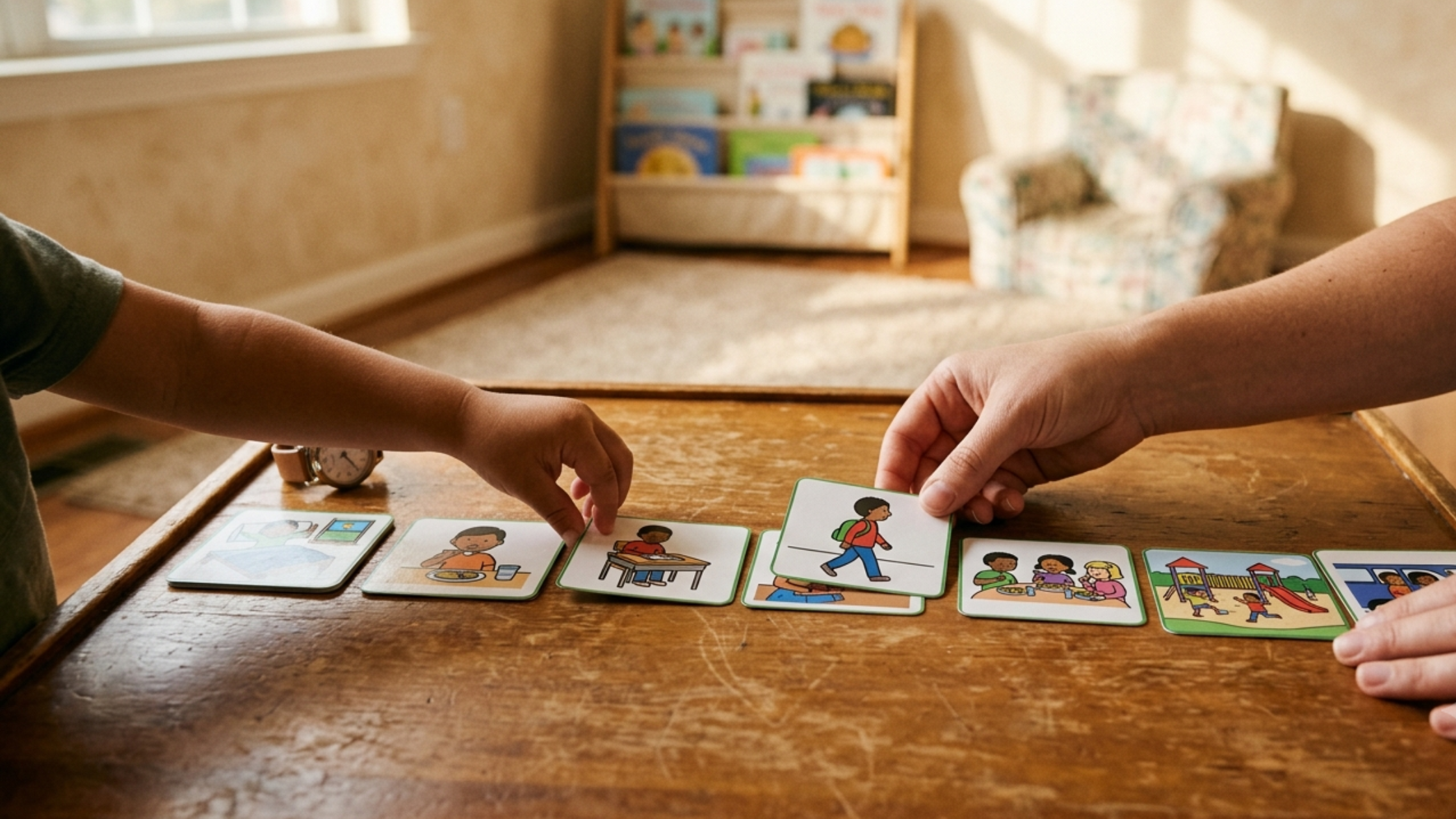
Using Visual Supports to Prepare for What Is Coming
Therapists use a range of visual tools in the pre-school period to help children build a mental map of what school will look like.
If the family has been able to visit the school before term, photographs of the classroom, the playground, the teacher and the school entrance become material for sessions. The therapist and child look through them together, name what they see, talk about what happens in each place, and build familiarity with the setting before it has to be navigated for real.
If a visit was not possible, simple drawings, video tours where schools provide them, or even just pictures of school-related objects, a backpack, a lunch box, a classroom desk, serve the same purpose. The goal is always to reduce the number of things that are completely new and unknown on the first day.
Coaching Parents Through the Transition
A significant part of what ABA therapists do in the pre-school period happens in conversations with parents rather than directly with the child.
Therapists at NeuroCore use this time to make sure families have clear, practical strategies ready for the specific moments that are most likely to be difficult. What to do the evening before school starts. How to handle the morning routine if the child is resistant. What to have ready when the child comes home in the afternoon. How to respond if there is a meltdown at the school gate.
These conversations are not about predicting disaster. They are about making sure that when something difficult happens, the family already knows what to do. That readiness changes the experience for everyone.
Communicating With the School
In the weeks before term, NeuroCore therapists also help families communicate relevant information to the school. What strategies are currently working for the child. What the early signs of dysregulation look like before they escalate. What sensory accommodations the child benefits from. How the child communicates when they need a break.
This information, shared before the first day rather than after the first crisis, gives teachers and learning support staff the context they need to support the child from day one rather than spending the first weeks figuring it out from scratch.
What This Looks Like for Your Child Specifically
Every child's pre-school preparation looks different because every child's profile is different. A child who is genuinely excited about going back will need a different focus than a child who has been refusing to talk about it. A child starting at a new school will need different preparation than one returning to a familiar environment.
At NeuroCore, the content of pre-school sessions is shaped around what that specific child needs, not a standard protocol applied to everyone.
If school return is something your family is thinking about and your child is currently on our caseload, speak with your therapist this week about how the next two sessions can be used most effectively before term starts.
If you have concerns about your child's development, consult our BCBA or your pediatrician.