How to Build a Back to School Routine Before the First Day
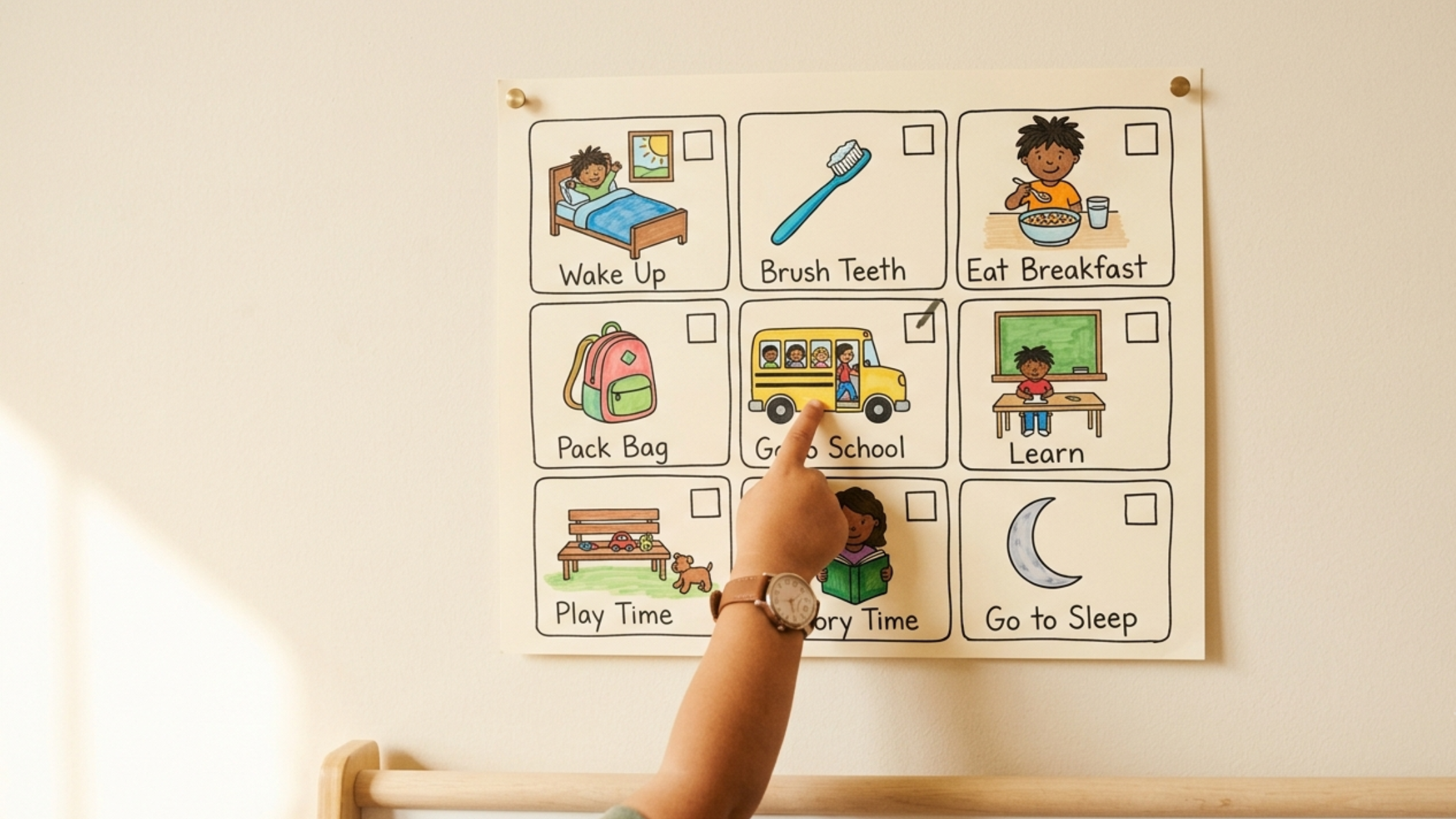
School starts on 25th August. That gives you just over a week from today to build the routine that will carry your child through the first weeks of term.
For children with autism, routine is not just comfort. It is regulation. A predictable sequence of events that happens the same way every day reduces the cognitive load of the morning to a level the child can manage. Without that predictability, every morning becomes a fresh negotiation, and fresh negotiations before eight in the morning, under time pressure, are where things fall apart.
Building the routine now, before school starts, means your child is not learning it under pressure on the first day. They are arriving at school already knowing what mornings feel like. That is a significant clinical advantage.
Start With What the Routine Actually Needs to Include
Sit down and map out every single step of the morning from the moment your child wakes up to the moment they walk through the school gate. Do not skip anything that actually needs to happen.
Wake up. Use the bathroom. Wash face. Get dressed. Eat breakfast. Brush teeth. Put shoes on. Pick up school bag. Get in the car. Walk from the car to the gate.
Each of these is a separate step. Each of them can be a friction point. Writing them all out first means you can see the whole picture rather than just the parts that have caused problems before.
Decide on the Order and Keep It Fixed
Once you have the list, decide on the order. For most children with autism, the order should stay exactly the same every day. Not because there is one correct sequence but because consistency is what makes the routine feel safe.
If your child currently does things in a different order on different days, summer is the time to fix that. Choose the order that makes the most practical sense and stick to it every day from now until school starts.
Build the Routine Into This Week
Do not wait until the night before school to introduce the routine. Start running through it this week, even though school has not started yet.
Set the alarm at school-day time. Go through every step in the right order. Pack the bag. Get dressed in the right clothes. Some families even do a full practice run where the child gets in the car and they drive to the school gate and back. It feels slightly odd when school is not actually open. It works.
The goal is to make the morning sequence so familiar that by 25th August it feels like something the child has already done many times. Because they have.
Use a Visual Schedule on the Wall
A visual schedule showing the morning steps in order, posted at eye level where your child can see it, is one of the most effective tools available for making a routine stick.
It does not need to be professionally designed. Simple hand-drawn pictures or printed photos of your child doing each step work perfectly well. What matters is that it is visible, consistent and stays in the same place every day.
When your child can look at the wall and see what comes next rather than relying on you to tell them, two things happen. The routine becomes theirs rather than something being imposed on them. And the morning has significantly less verbal back and forth, which reduces friction for everyone.
Adjust the Wake-Up Time Gradually
If your child has been waking at eight thirty or nine during summer, they cannot make the jump to six thirty on 25th August without it being a shock to their system. A dysregulated child who did not sleep enough is going to have a very hard first day.
Start moving the wake-up time forward by fifteen to twenty minutes every two days from now. It feels slow but it works. By the time school starts the body clock will have shifted enough that the early morning does not feel like an assault.
Build In a Buffer
Whatever time you think you need in the morning, add fifteen minutes to it.
Children with autism often need more time than the routine appears to require. A sock that does not feel right. A breakfast that is slightly different from yesterday. A question about what is going to happen today that needs a real answer before they can move on. These things take time and they cannot always be predicted.
A morning with fifteen extra minutes is a morning where you can handle one unexpected thing without the whole schedule collapsing. A morning with no buffer is a morning where one small thing derails everything.
What to Have Ready at the Door
The launchpad concept is simple. Everything that needs to leave the house in the morning is prepared and placed at the door the night before. Bag packed. Shoes out. Water bottle filled. Any medication or sensory items already in the bag.
A child who walks to the door in the morning and finds everything ready does not have to hold the mental load of remembering what needs to come with them. The environment does that work for them.
How NeuroCore Can Help
If mornings are consistently a significant source of stress in your household and you want clinical support in building a routine that actually works for your child's specific profile, our team is here to help.
If you have concerns about your child's development, consult our BCBA or your pediatrician.