Understanding Independent Play for Toddlers
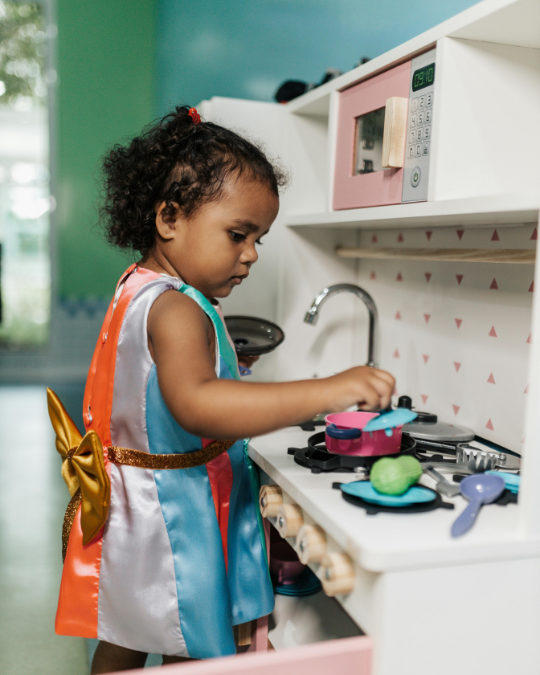
At the toddler stage, play is not a break from development it is development. It is how a child maps the world, tests the properties of objects, and learns the boundaries of their own physical and cognitive capabilities. When we talk about independent play for toddlers, we are not describing long, uninterrupted stretches of solitude. We are describing something more nuanced: a toddler's growing ability to engage in self-directed exploration moments where they are actively interacting with their environment without the direct guidance or participation of an adult.
At NeuroCore, we view this kind of play as the bedrock of future agency. When a toddler is given the space to figure out how to stack a cup, fit a shape into a sorter, or discover what happens when they drop something from a height, they are practicing essential executive functioning skills problem-solving, sustained attention, and the ability to tolerate the small, manageable frustrations that naturally arise during exploration. These are not trivial moments. They are the building blocks of independence.
The Environment Is the Foundation
To successfully foster independent play, we must first recognize that a toddler's environment acts as their third teacher. If we want a toddler to engage in self-directed exploration, the space must be deliberately engineered to support it.
This means providing materials that are inherently engaging and easy to manipulate and removing the need for an adult to act as the gatekeeper of those materials. An environment that requires a toddler to ask for help to access a toy, or one so cluttered it becomes visually overwhelming, will naturally lead to a child seeking an adult to resolve the friction rather than exploring independently.
By keeping a small, rotating selection of high-interest, open-ended materials at a low and accessible height, we give the toddler the tools they need to initiate play entirely on their own terms. This shift — however simple it sounds — gives a toddler a meaningful sense of environmental control during a developmental stage where they are frequently told no or redirected by the adults around them.
Independent Play Is Naturally Episodic and That's Perfectly Normal
One of the most common misconceptions parents hold about independent play is that sustained focus on a single activity is the goal. In reality, independent play for toddlers is naturally fluid and episodic.
You will often see a toddler engage deeply with one object for a minute or two, become drawn to something else entirely, and then move on again. This is not a failure of attention it is a healthy sign of a curious mind rapidly sampling its environment and following its own internal logic.
At NeuroCore, we support this by encouraging caregivers to resist the urge to extend their toddler's play or redirect them back to a toy they have clearly finished exploring. When we allow a toddler to shift their attention naturally, we are respecting their internal rhythm and their autonomy. Attempting to force a toddler to "finish" an activity frequently transforms what was self-motivated exploration into a compliance-based task the exact opposite of the independent play we are trying to cultivate.
The Role of the Caregiver: Dignified Proximity
Independent play does not require physical distance between a toddler and their caregiver. In fact, some of the richest independent play happens when a caregiver is nearby, quietly engaged in their own task — present but not directing.
This concept, which we call dignified proximity, recognizes that a caregiver's nearby presence acts as a secure attachment anchor. It provides the toddler with the physiological safety they need to venture into their own play with confidence. When a toddler looks up and sees a trusted adult calmly present, they feel regulated and secure which allows them to return their attention to their own exploration.
This is a subtle but powerful form of co-regulation. You are not doing the play for your child. Your presence simply makes it safe for them to do it themselves.
Building a "Can-Do" Internal Narrative
Each time a toddler navigates a small challenge independently figuring out a shape sorter, building a tower that doesn't fall, or finding a way to reach something just out of their grasp they are adding to what we think of as a "can-do" internal narrative. This growing belief in their own capability is one of the most valuable things a toddler can develop, and it will serve them throughout childhood and far beyond.
Independent play, when supported thoughtfully, is one of the most consistent and natural ways to build this internal confidence. It tells a child, repeatedly and without words: you are capable, you can figure things out, and you don't always need someone else to solve it for you.
How NeuroCore Supports Independent Play Development
If your toddler is having difficulty engaging with their toys independently, or consistently relies on an adult to drive their play, this is something NeuroCore's clinical team can help with. We work with families to analyze the environmental variables at play the setup of the space, the type of materials available, the caregiver's role during play and make targeted adjustments that support your toddler's growing independence.
Our approach is to partner with you in creating a home environment that genuinely respects your toddler's unique developmental needs and empowers them to discover the world at their own pace — with confidence, curiosity, and a growing sense of their own capability.
If you have concerns about your child's development, consult our BCBA or your pediatrician.