How In-School ABA Support Helps Children Succeed in Dubai's Classrooms
For many children with autism or developmental differences, the classroom presents a unique set of challenges that don't always show up at home. Following multi-step instructions, transitioning between activities, managing sensory input in a busy room, or navigating social dynamics with peers all require skills that are best built, and reinforced, exactly where they're needed: at school. This is where in-school ABA support becomes one of the most effective tools available to families in Dubai.
What Is In-School ABA Support?
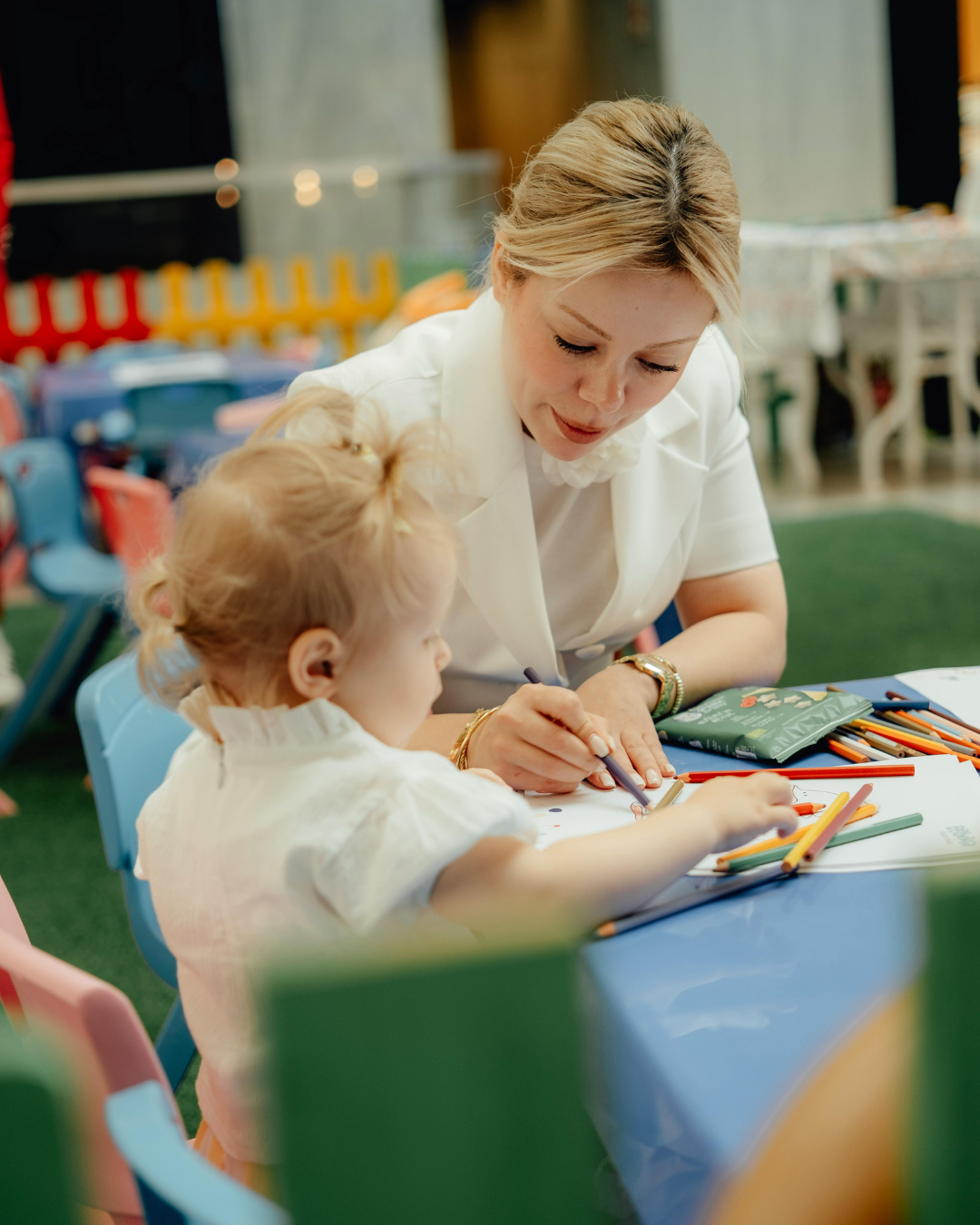
In-school ABA support involves a trained therapist, supervised by a Board Certified Behavior Analyst (BCBA), working directly with a child within their school environment. Rather than addressing classroom challenges secondhand through reports from teachers, the therapist is present to observe, support, and teach skills in real time , during lessons, transitions, group work, and unstructured time like recess.
This model bridges a gap that purely home-based or center-based therapy often can't close on its own: classroom-specific challenges require classroom-specific solutions.
Why the School Environment Matters So Much
A child might be able to follow instructions calmly at home but struggle significantly with the same task in a classroom of twenty-five students. The reasons are usually environmental: sensory overload, unfamiliar social expectations, less individualized attention, and the cognitive demand of managing academics and behavior simultaneously.
In-school ABA support addresses these challenges directly, rather than hoping that skills built elsewhere will transfer automatically. For many children, they simply don't — not because the skill wasn't learned, but because the classroom is a fundamentally different environment that requires its own targeted support.
Common Goals Addressed Through In-School ABA
Depending on a child's individual needs, in-school ABA support often focuses on:
Following classroom instructions and routines, including multi-step directions from a teacher
Managing transitions, such as moving between subjects, activities, or from indoor to outdoor settings
Social skill development, including initiating peer interaction, sharing, turn-taking, and navigating group work
Reducing disruptive or escape-driven behaviors that interfere with learning
Building independence, so a child can eventually rely less on one-to-one support over time
Supporting communication, particularly for children who are non-verbal or have limited verbal communication
How In-School ABA Fits Alongside an IEP
Many families in Dubai are also navigating an Individual Education Plan (IEP) with their child's school. In-school ABA support and an IEP work hand in hand — the IEP outlines academic and behavioral accommodations agreed upon with the school, while in-school ABA provides the direct, individualized support needed to help a child actually meet those goals day to day.
A strong ABA provider will coordinate closely with your child's school, teachers, and support staff to ensure strategies are consistent across the classroom, rather than operating in isolation.
What This Looks Like in Practice
A typical in-school ABA session might involve a therapist sitting alongside a child during a lesson, prompting and reinforcing appropriate participation, stepping in during a difficult transition to help the child self-regulate, or facilitating a structured social interaction during free play. Throughout, the therapist collects data on specific target behaviors, which is reviewed by the supervising BCBA to refine the approach over time.
Critically, the goal isn't constant intervention, it's building genuine independence, with support gradually reduced as the child demonstrates consistent progress.
Why Families in Dubai Choose In-School Support
For many of the families NeuroCore works with, in-school ABA support is a natural extension of in-home therapy. Skills built at home, communication, emotional regulation, following instructions — need a parallel layer of support in the classroom, where the social and academic demands are different and often more complex. Addressing both environments together leads to far more consistent, durable progress than focusing on just one.
How NeuroCore Approaches In-School Support
NeuroCore therapists work directly within your child's school setting, coordinating with teachers and support staff to ensure consistency between what's happening in therapy and what's happening in the classroom. Every in-school program is built around your child's specific academic and behavioral goals, supervised closely by a BCBA, and reviewed regularly to track real progress — not just attendance.
Getting Started
If your child is struggling in the classroom despite progress at home, in-school ABA support may be exactly the missing piece. The first step is a conversation with our clinical team about your child's specific challenges and what coordinated support across home and school could look like.
If you have concerns about your child's development, consult our BCBA or your pediatrician.