In-Home vs. Clinic-Based ABA: Which Is Right for Your Child?
If you're researching ABA therapy for your child, you've probably noticed it comes in more than one format. Some providers run sessions exclusively out of a clinic or center. Others, like NeuroCore, deliver care directly in the home or school. Both approaches are grounded in the same evidence-based science of Applied Behavior Analysis , but they look and feel very different day to day, and the right choice depends on your child, your family, and your goals.
This guide breaks down how in-home and clinic-based ABA actually differ, the strengths of each, and how to think through which setting will serve your child best.
The Core Difference: Environment
The biggest distinction between these two models isn't the therapy itself, it's where it happens.
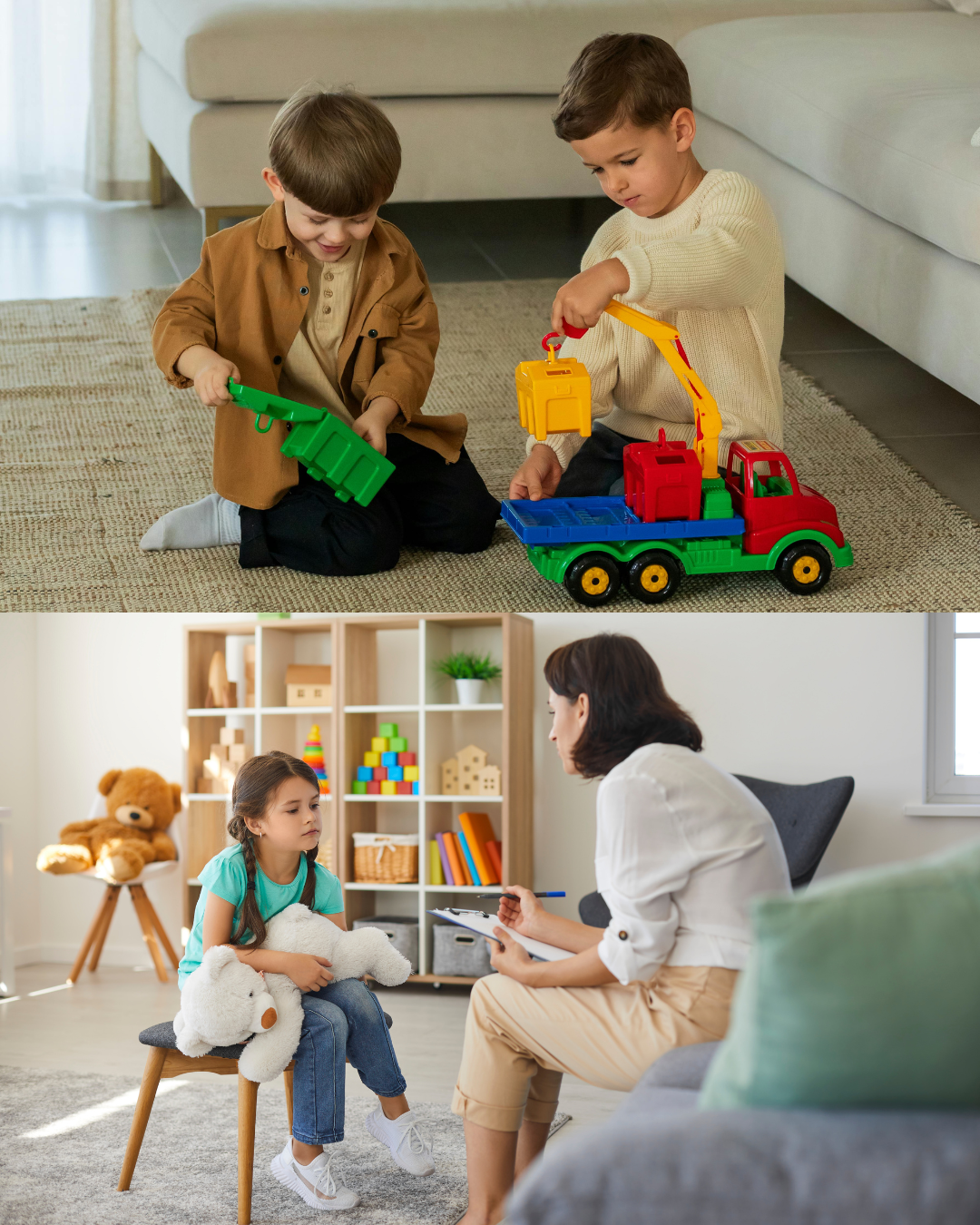
Clinic-based ABA takes place in a dedicated therapy center, often equipped with structured classrooms, sensory rooms, and multiple therapists and peers on-site at once. Sessions are scheduled around the clinic's hours, and your child travels to the location.
In-home ABA, the model NeuroCore specializes in, brings a trained therapist directly into your child's everyday environment, their bedroom, kitchen, backyard, or classroom. Therapy happens inside real routines rather than a simulated version of them.
Neither setting is inherently "better" in every case. The right fit depends on what your child needs to work on and how they respond to environment, structure, and people.
When Clinic-Based ABA Tends to Work Well
Clinic settings can be a strong option for children who benefit from:
Peer interaction and group dynamics. Clinics often have multiple children present, which creates natural opportunities to practice turn-taking, sharing, and group instruction-following.
Highly structured, low-distraction environments. Some children focus better away from the home environment, where siblings, pets, or household noise might be distracting.
On-site specialized equipment. Sensory gyms, dedicated therapy rooms, and multi-disciplinary teams under one roof can be valuable for certain treatment goals.
When In-Home ABA Tends to Work Better
In-home therapy, NeuroCore's core specialty, tends to be the stronger choice when:
1. Skill generalization is a priority
Many children can perform a skill in a clinic but struggle to use it at home. If your child has learned something in another setting but isn't using it in daily life, in-home therapy closes that gap directly — there's no "transfer" step needed because the skill is built right where it needs to happen.
2. Real-life triggers need real-life solutions
Mealtime refusal, bedtime resistance, or meltdowns during the morning rush rarely show up the same way in a clinic. NeuroCore therapists see these challenges as they actually unfold and build strategies around your family's real routines, not a simulated version of them.
3. Your child struggles with transitions or new environments
For children who are sensitive to unfamiliar spaces, removing the stress of travel and clinic adjustment allows sessions to begin from a calmer, more regulated state — which often means more productive therapy time.
4. Parent involvement matters to you
In-home sessions naturally include caregivers in the process. Parents can observe strategies in real time, ask questions on the spot, and practice techniques immediately rather than trying to recall them after a clinic visit.
5. You need flexibility around school and family schedules
NeuroCore therapy can take place at home, at school, or across both — coordinated around your family's actual life, not the clinic's posted hours.
Can You Combine Both Approaches?
Yes — and many families do. It's increasingly common for children to receive in-home or in-school ABA for routine-based goals and skill generalization, while occasionally incorporating clinic-based or group sessions for social skill-building with peers. A good BCBA will help you determine whether a blended approach makes sense for your child's specific goals.
Questions to Ask Yourself When Deciding
Does my child currently struggle to use skills outside of therapy sessions?
Are our biggest behavioral challenges happening at home, at school, or in public — not in a clinical setting?
Does my child get overwhelmed by new environments or transitions?
Do I want to be directly coached on strategies as part of the therapy process?
Does our family's schedule make travel to a clinic difficult to sustain consistently?
If you answered yes to most of these, in-home ABA is likely to be the stronger fit.
How NeuroCore Approaches This Decision
At NeuroCore, every child starts with a thorough assessment before we recommend a setting or approach. We don't believe in a one-size-fits-all model — our BCBAs evaluate your child's specific goals, your family's routines, and the environments where support is needed most, then build a plan around that. For most of the families we work with, in-home and in-school therapy deliver faster, more sustainable progress because the skills are built exactly where they're needed.
Getting Started
Choosing between in-home and clinic-based ABA doesn't have to be a guessing game. The best next step is a conversation with a provider who can assess your child's specific needs and walk you through what care would actually look like for your family.
If you'd like to talk through what setting makes the most sense for your child, NeuroCore's team is here to help you figure that out, no pressure, just clarity.
This article is for general informational purposes and is not a substitute for individualized clinical advice. If you have concerns about your child's development, consult our BCBA or your pediatrician.