How to Run ABA Sessions With a Child Who Uses an AAC Device
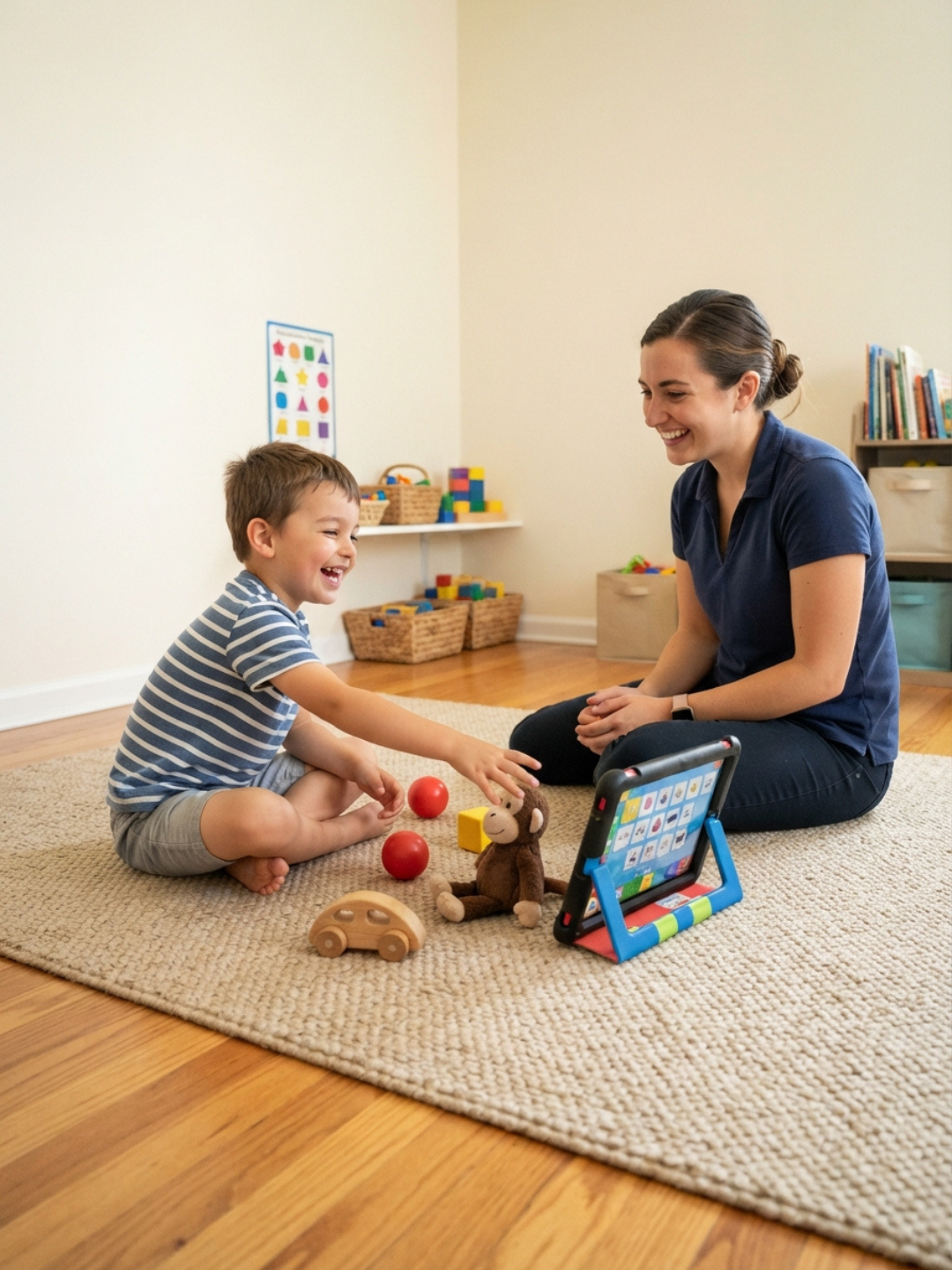
During AAC Awareness Month, this post is written specifically for ABA therapists who are working with, or preparing to work with, children who use a high-tech AAC device as their primary communication system. Running effective ABA sessions with an AAC user requires specific clinical knowledge and adaptations to standard session practice. This guide covers the most important of these in practical, applicable terms.
The Device Is Always Present
The most fundamental rule of running ABA sessions with an AAC user is that the device must be present and accessible throughout the entire session. Always. Without exception.
A child's AAC device is their voice. Removing it during a session, even briefly, removes their ability to communicate fully. Putting it away because it is a distraction, because the child is pressing random buttons, or because you want the child to attend to something else, is not a clinically appropriate response. The device stays. The session is structured to accommodate its presence.
You Must Model the Device Consistently
You cannot expect a child to become a fluent AAC user if the adults around them only use the device to prompt the child to communicate. Modelling, which means using the child's own device to communicate throughout the session, is one of the most important and most frequently neglected components of AAC support in ABA practice.
Modelling does not mean narrating everything. It means using the device meaningfully in the natural flow of the session. When you offer a choice, show the options on the device. When you comment on what the child is doing, model the comment on the device. When you make a request of the child, model the request on the device alongside your verbal instruction.
The more the child sees the device used as a genuine communication tool by the adults in their environment, the more they understand what it is for and how to use it.
Creating Genuine Communication Opportunities
ABA sessions with AAC users should be built around genuine communication opportunities rather than drill-based practice. The difference matters clinically.
A practice drill asks the child to press a symbol in response to a therapist prompt, with a reward following the correct response. A genuine communication opportunity creates a real situation where the child has something to communicate and the device is the means by which they communicate it.
Create genuine communication opportunities by arranging the environment so that things the child wants require communication to access. Place preferred items out of reach. Offer choices between two real options. Start an activity the child enjoys and pause it at a key moment. These situations create real communicative need rather than simulated practice.
Prompting Hierarchy for AAC Use
The same prompting hierarchy principles that apply to any ABA teaching apply to AAC. Always use the least intrusive prompt that produces a successful response. Fade prompts systematically as independence develops. Track the level of prompting required in your data so the fading process can be monitored.
For AAC specifically, the prompting hierarchy might look like this in order from least to most intrusive. Waiting expectantly without speaking, giving the child time to initiate independently. Looking at the device without pointing. Pointing to the device without touching it. Pointing to the general area of the relevant symbol on the device. Pointing directly to the correct symbol. Physically guiding the child's hand to press the correct symbol.
The goal is always to move toward the left end of this hierarchy over time. A child who requires full physical guidance to use the device today should be progressing toward independence through a systematic fading plan.
Data Collection With AAC Users
Data collection for AAC targets follows the same principles as data collection for any other ABA target, with some specific considerations.
Record the level of prompting required for each communication opportunity, not just whether the correct symbol was pressed. A correct response with full physical guidance is clinically very different from a correct response with no prompting, and your data needs to reflect this distinction.
Record whether the communication was spontaneous, meaning the child initiated without any prompt, or prompted. Spontaneous communication is the functional goal. Prompted communication is a step on the way there. Both are worth tracking.
Record the context of each communication opportunity, meaning whether it was a naturalistic opportunity or a structured practice trial, and which communication function was targeted, whether requesting, commenting, responding, or another function.
How NeuroCore Supports Therapists Working With AAC Users
NeuroCore's live online IBT and ABAT training covers AAC support within the broader context of functional communication training in ABA practice. Our clinical team in Dubai works with AAC users regularly and brings real practical experience to every aspect of how this clinical work is structured.
Visit our IBT and ABAT Training page to learn more or enrol now and find out when our next live sessions are scheduled.