How to Help My Child With Autism Thrive in School: A Parent's Role
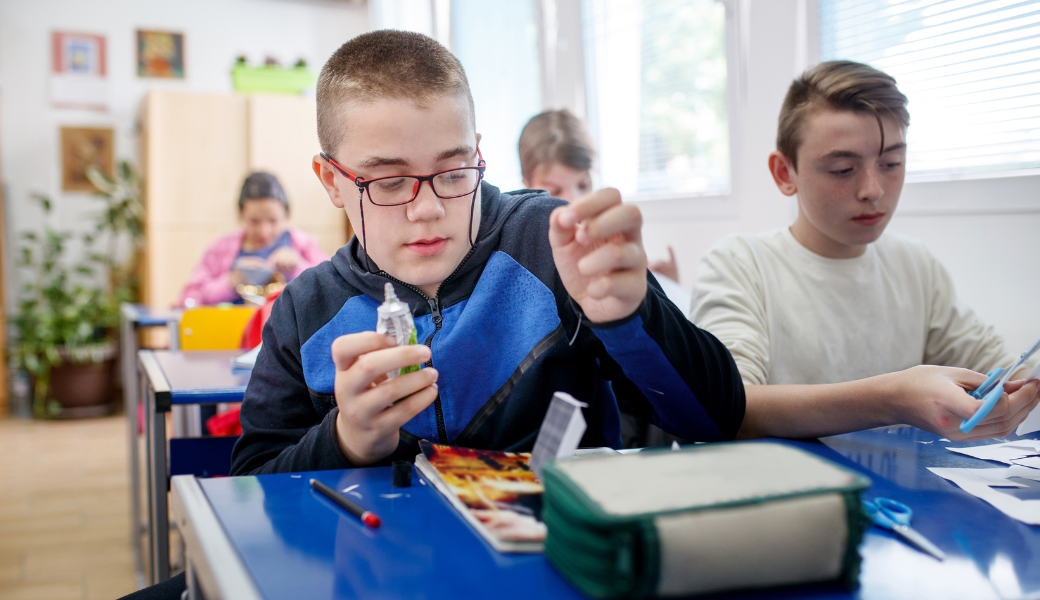
The school environment is one of the most complex and demanding settings a child with autism will navigate. In the space of a single school day, a child is asked to manage sensory input from a busy classroom, decode the unspoken social rules of peer interaction, follow multi-step academic instructions, handle repeated transitions between subjects and spaces, and regulate their emotions throughout all of it — largely without the familiar safety of home.
For many autistic children, the school day is genuinely exhausting in ways that are invisible to the people around them. And for many parents, the distance between home and school can feel like one of the hardest parts of supporting a child with autism — knowing that so much is happening in an environment you cannot directly control or observe.
At NeuroCore, our approach is built on one foundational belief: the most powerful school support a child can have is a parent who is informed, equipped, and actively partnering with the school from the home side. This guide is about your role in that partnership — what you can do at home, how you can advocate effectively, and how you can protect your child's sense of belonging and confidence throughout their school journey.
Know Your Child's Sensory Profile Before School Does
Every classroom has its own unique sensory landscape — and what feels manageable to one child can be genuinely overwhelming to another. Fluorescent lighting, the noise of a group working simultaneously, the unpredictable sensory texture of shared spaces like the cafeteria or corridor — any of these can push an autistic child toward dysregulation before the academic demands of the day have even begun.
Before your child can be effectively supported in school, the adults around them need to understand their specific sensory profile: what triggers stress, what promotes regulation, and what the early signs of overwhelm look like before they escalate.
At NeuroCore, we conduct detailed sensory assessments that help parents articulate their child's needs clearly and specifically to school staff. This clarity is what enables schools to provide accommodations that actually work — not generic adjustments, but targeted modifications designed around your child's real experience. This might mean access to noise-cancelling headphones during independent work, a designated quiet space for sensory breaks, or adjustments to seating position that reduce unnecessary sensory input.
From Home to School: Building Bridges That Hold
One of the most significant predictors of a child's success in school is the consistency between what happens at home and what happens in the classroom. A child who receives clear, structured, neuro-affirming support at home but encounters unpredictable, compliance-focused management at school is being asked to operate across two fundamentally different frameworks every day — which is exhausting and often destabilising.
At NeuroCore, we help families build what we call home-to-school bridges: shared strategies, communication tools, and behavioural frameworks that translate consistently across both environments. This might mean ensuring teachers understand how your child signals that they need a break, sharing the visual supports that work at home so they can be replicated in the classroom, or providing staff with the specific language your child uses or responds to most effectively.
When a child experiences the same supportive framework everywhere they go, their environment becomes more predictable, their anxiety decreases, and their capacity to engage with learning genuinely increases.
Teaching Your Child to Advocate for Themselves at School
Academic performance is measurable. But the skills that determine whether a child actually thrives in school — the ability to recognise when they are reaching their limit, to ask for help, to signal that something is wrong before it becomes a crisis — are not captured in any report card.
At NeuroCore, we prioritise self-advocacy skill-building as one of the most important things a child can develop for the school environment. This means teaching a child to use a simple non-verbal signal or AAC tool to request a break when they feel overwhelmed, to communicate that an instruction wasn't clear, or to indicate that the current environment is more than their nervous system can currently manage.
A child who can advocate for themselves in these moments is a child who can access the support they need without waiting for an adult to notice the signs of distress — which often come too late. This level of independent self-regulation is more valuable than any academic accommodation alone.
Redefining What Progress at School Looks Like
It is easy to measure school success in terms of grades, behaviour reports, and academic milestones. But for a child with autism, some of the most significant progress in school is invisible in those metrics.
Is your child arriving at school without significant anxiety? Are they able to manage a transition between subjects without significant dysregulation? Are they forming even one meaningful connection with a peer or trusted adult? Do they feel safe enough in the school environment to ask for what they need?
At NeuroCore, we encourage families to broaden the lens through which they measure their child's school experience — to look beyond compliance and performance toward belonging, confidence, and emotional wellbeing. A child who is consistently dysregulated, avoidant, or shutting down at school is telling us that the environment needs adjusting, not that the child needs fixing.
How NeuroCore Supports Families Through the School Journey
Whether your child is beginning school for the first time or navigating a new academic year with new challenges, NeuroCore's clinical team is here to support you through every stage. We work with families across Dubai to conduct sensory and functional assessments, build school advocacy plans, develop home-to-school support frameworks, and coach parents in communicating effectively with educational teams.
You do not have to navigate this alone — and your child does not have to simply manage in an environment that was not designed for them. With the right support from both sides, school can be a place where your child genuinely belongs.
If you have concerns about your child's development, consult our BCBA or your pediatrician.