How ABA Strategies Help Teachers Support Students With Cerebral Palsy in Dubai
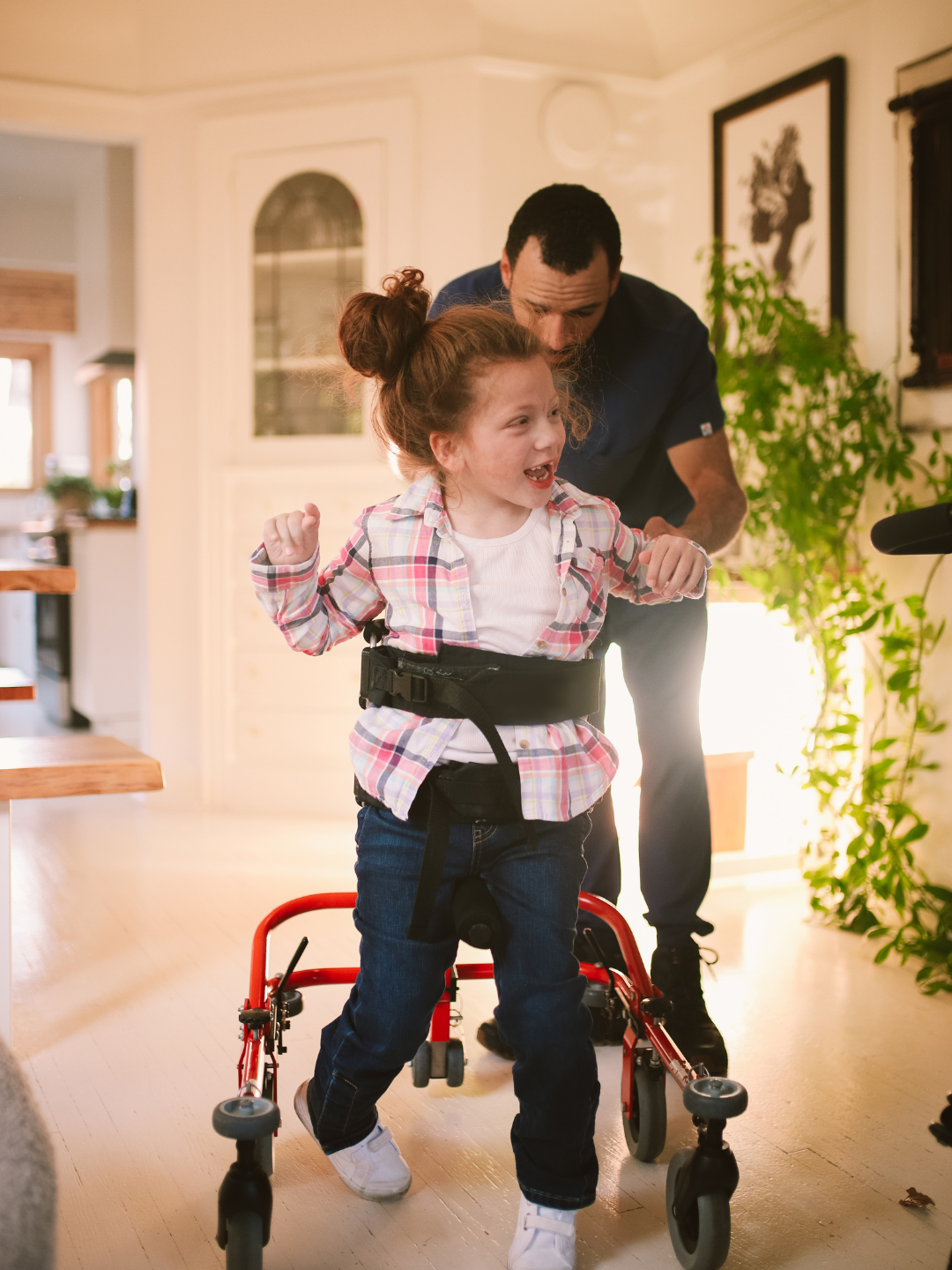
Cerebral palsy is a group of conditions that affect movement and motor development. It results from differences in the developing brain, typically occurring before or during birth, and it affects each person differently in terms of which parts of the body are affected, the type of movement difference involved, and the degree to which daily functioning is impacted.
Some children with cerebral palsy have primarily physical differences, with typical or near-typical cognitive and communication development. Others have complex needs that include differences in communication, learning, and behaviour alongside the physical impact of the condition. The range is wide and the support a child needs must be built around their individual profile rather than around the diagnosis label.
ABA strategies are relevant for many students with cerebral palsy, particularly those whose profile includes communication differences, learning differences, or behaviour that interferes with their participation in school. This post is for Dubai teachers who are supporting a student with cerebral palsy and want to understand how ABA-informed approaches can make that support more effective.
Understanding the Student's Specific Profile First
The first and most important step in supporting a student with cerebral palsy in a Dubai classroom is understanding that student's specific profile. Cerebral palsy is not a single presentation. Two students with the same diagnosis may have completely different needs, strengths, and communication profiles.
Find out specifically what the student can and cannot do independently. Which physical tasks require support or adapted equipment? Which cognitive and language tasks are within their current capacity? How does the student communicate, through speech, through AAC, through eye gaze technology, through gesture? What does challenging behaviour look like for this student and what typically precedes it?
This information should come from the student's family, from any therapy reports available, and from direct observation. Do not assume based on the diagnosis.
Communication Adaptations Informed by ABA
Many students with cerebral palsy use alternative and augmentative communication. This might be a high-tech AAC device operated by touch, switch access, or eye gaze. It might be a low-tech communication board. It might be a combination of gesture, vocalization, and supported communication.
ABA practice offers several principles that are directly applicable to supporting AAC users in the classroom. Respond to every communication attempt immediately and consistently. A student who uses their AAC device to make a request and receives a prompt, consistent response learns that the device works. A student whose communication attempts are sometimes ignored or delayed learns that their communication is unreliable, which reduces their motivation to use it.
Give the student adequate time to formulate and deliver a communication. AAC takes longer than speech. A classroom that moves too quickly from question to answer, or from instruction to expected response, does not give an AAC user the processing and formulation time they need. Building in deliberate wait time is one of the simplest and most effective adaptations available.
Academic Participation and ABA-Informed Scaffolding
Many students with cerebral palsy benefit from the kind of structured, step-by-step scaffolding that is central to ABA teaching practice. Breaking tasks into smaller components, providing clear visual supports, using consistent language and predictable routines, and delivering immediate and specific reinforcement for effort and achievement are all strategies from ABA practice that translate directly into inclusive classroom support.
Adapted materials and equipment are often needed, and the specific adaptations should be guided by the occupational therapist working with the student. What ABA adds to this is the systematic teaching approach that helps the student learn to use those adapted materials effectively, building independence gradually through prompting and fading strategies.
Behaviour Support in the Classroom
For students with cerebral palsy who engage in behaviour that disrupts their learning or the learning of others, the ABA approach starts in the same place it always starts: understanding the function.
Frustration with communication is a very common driver of challenging behaviour in students with cerebral palsy. When a student cannot reliably communicate their needs, make choices, or indicate when something is wrong, the resulting frustration often emerges as behaviour. The most effective intervention in these cases is building more reliable and accessible communication, not managing the behaviour itself.
Physical discomfort or fatigue is another common driver that is sometimes missed. A student who is in an uncomfortable position, who is physically tired from the effort of managing their movement, or who is experiencing pain may exhibit behaviour that looks like opposition but is actually a physical response. Building in regular comfort checks and movement breaks, and making it easy for the student to signal physical discomfort, reduces this source of challenging behaviour significantly.
How NeuroCore Supports Students With Cerebral Palsy
NeuroCore works with children across a range of physical and neurodevelopmental profiles. When we work with a student with cerebral palsy, our clinical approach is always built around that student's specific communication profile, learning style, and the physical realities of their daily experience.
If you have concerns about a student's development or behaviour, encourage the family to consult our BCBA or their pediatrician.