What Is Stimulus Control and Why Does It Matter in ABA Practice?
Stimulus control is one of those concepts in ABA that sounds more technical than it actually is. Once you understand what it means and why it matters, you will start seeing it everywhere in clinical practice and recognising how much of what ABA does is fundamentally about establishing it.
What Stimulus Control Means
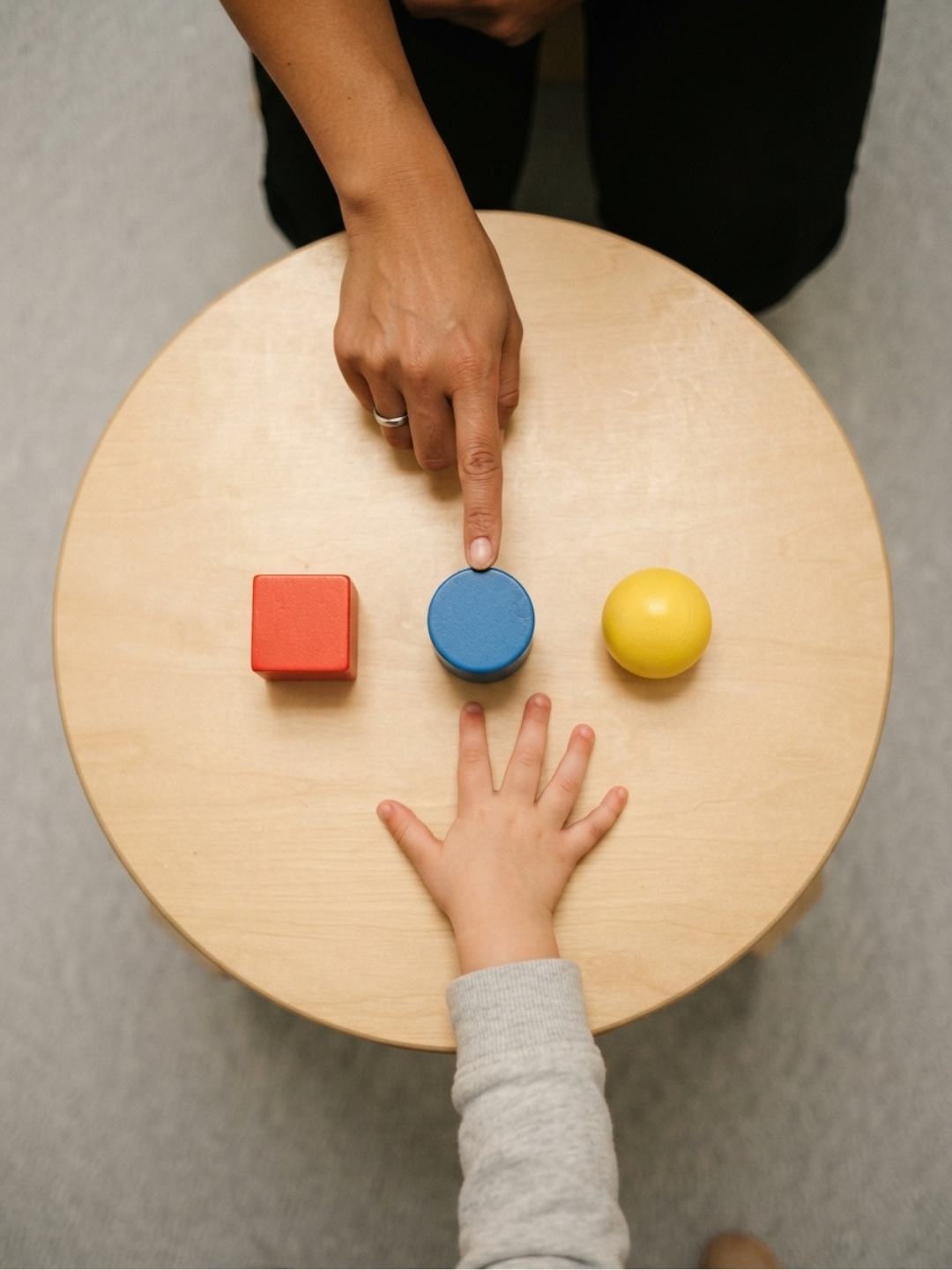
A behaviour is said to be under stimulus control when it occurs reliably in the presence of a specific stimulus and does not occur, or occurs much less, in the absence of that stimulus.
In everyday language: the right behaviour happens at the right time, in the right context, in response to the right cue.
When a child responds to their name being called, name calling is a stimulus that controls the behaviour of responding. When a child stops at a red traffic light but not at a green one, the colour of the light is the stimulus controlling the stopping behaviour. When a child sits down when a specific signal is given but not at other times, that signal has stimulus control over sitting.
Stimulus control is not a special technique in ABA. It is the outcome that most ABA teaching is working toward. The goal of teaching a child to request using a communication device is that the presence of a desired item, combined with the absence of that item being automatically provided, becomes the stimulus that controls the requesting behaviour. The goal of teaching a child to follow instructions is that the instruction becomes the stimulus that controls the relevant behaviour.
Why Stimulus Control Matters for Teaching New Skills
When you are teaching a new skill in ABA, you are essentially working to establish stimulus control. You want the target behaviour to come under the control of the specific stimulus that should cue it, rather than other stimuli in the environment.
A common problem in ABA teaching is inadvertent stimulus control, where a behaviour comes under the control of a stimulus that was not intended to cue it. A child who only responds to the instruction sit down when the therapist also points to the chair has developed stimulus control by the combination of the verbal instruction and the gesture, not by the verbal instruction alone. Remove the gesture and the behaviour falls apart.
This is why careful attention to exactly what stimulus is being presented at the moment of correct responding is essential in DTT and in naturalistic teaching. If the teaching trials include unintended prompts, cues, or contextual signals alongside the intended discriminative stimulus, stimulus control will develop over the whole package rather than over the intended cue alone.
Why Stimulus Control Matters for Behaviour Support
Stimulus control is equally relevant to understanding and addressing challenging behaviour. Many challenging behaviours are under very clear stimulus control, even if that control was not deliberately established.
A child who throws materials reliably when a specific demand is presented has throwing under the stimulus control of that demand. A child who engages in self-stimulatory behaviour in specific sensory conditions has that behaviour under the stimulus control of those conditions. Understanding which stimuli are controlling a challenging behaviour is an essential part of functional behaviour assessment and helps identify what antecedent modifications might reduce the behaviour.
If you can identify the stimulus that reliably evokes a behaviour, you can often reduce the behaviour by modifying that stimulus, by changing the demand, by altering the environment, or by teaching the child a different response to the same stimulus.
Common Clinical Examples
A teacher who always gives a three-second pause after asking a question before calling on a student has established that pause as a stimulus for the class that it is time to think rather than immediately respond. That is deliberate stimulus control.
A child who begins tidying up when a specific song comes on has the tidying behaviour under the stimulus control of that song. The family or therapist established that control deliberately by consistently pairing the song with the beginning of tidy-up time.
A child who only uses their communication device in therapy sessions but not at home has device use under the stimulus control of the therapy context. Generalisation training in ABA is largely the work of bringing the behaviour under the stimulus control of the natural environment rather than only the clinical one.
How NeuroCore Uses This in Clinical Practice
At NeuroCore, stimulus control is considered in the design of every teaching programme and every behaviour support plan. We pay close attention to what is actually controlling each behaviour we are working with, whether that control is serving the child well or not, and what changes to the environment or the teaching approach will bring behaviour under the most useful and functional stimulus control.
Visit our IBT and ABAT Training page to learn more or enrol now and find out when our next live sessions are scheduled.