The UAE's public holiday calendar includes some of the most significant cultural and religious events of the year. Eid, National Day, and Islamic holidays bring extended breaks from school and work, family gatherings, travel, and changes to almost every aspect of daily routine.
For families of children with autism, these breaks require specific planning. Not to prevent celebration or avoid the events themselves, but to manage the disruption to routine in a way that allows your child to participate as fully as possible without becoming overwhelmed.
This post covers practical ABA strategies that are specifically useful during extended UAE public holiday periods.
The Core Challenge: Routine Disruption
Most children with autism rely on predictable routines to stay regulated. The school day provides a reliable daily structure for much of the year. When a public holiday breaks that structure for several days or more, the child's nervous system has to work harder to navigate a day that does not follow the expected pattern.
This is not unique to UAE holidays. It applies to any extended break. What makes UAE public holidays specific is that they often come with additional social and sensory demands, family gatherings, celebrations, travel, and changes to mealtimes, all arriving at the same time as the routine disruption.
Build a Holiday Schedule Before the Holiday Starts
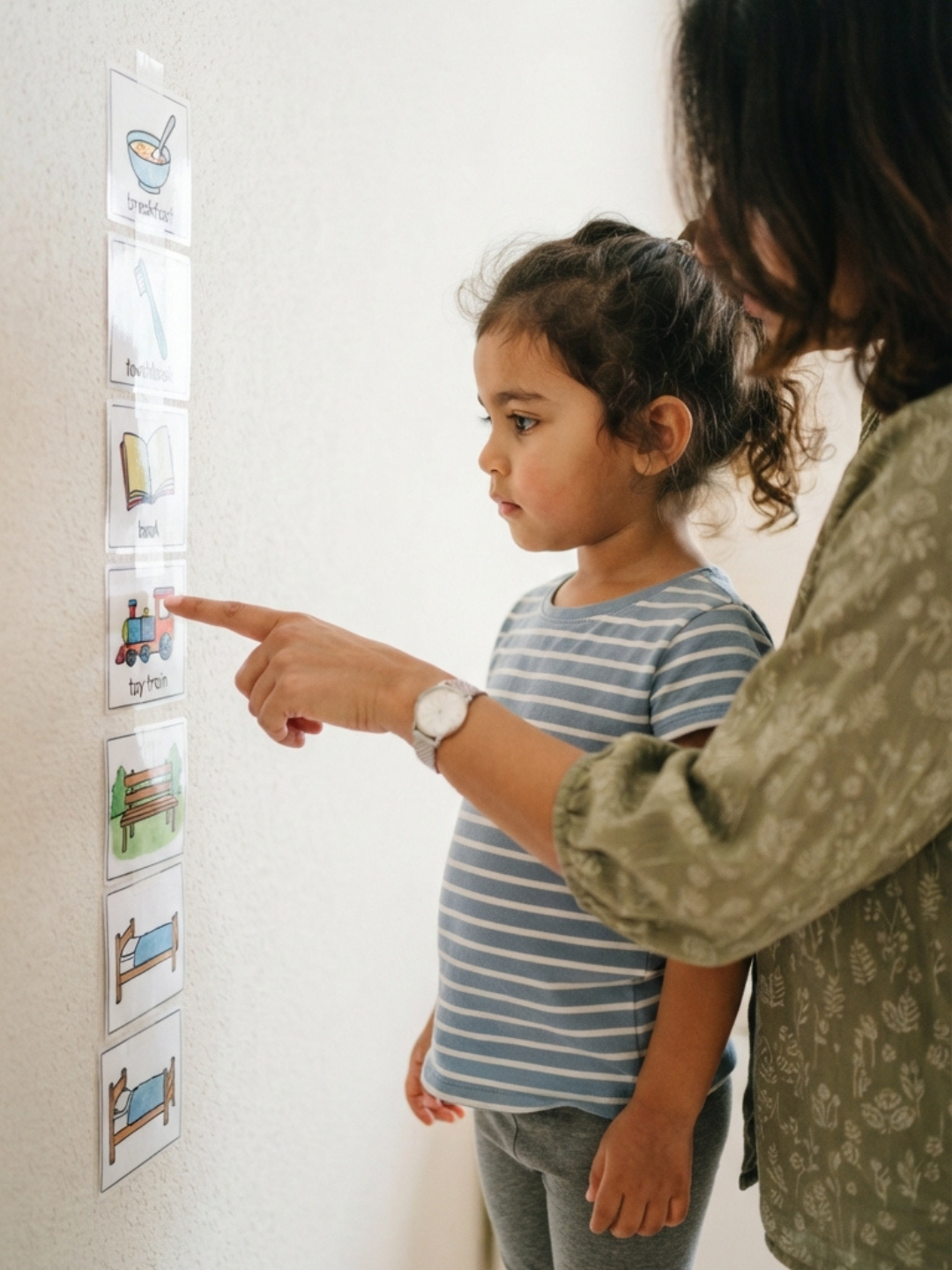
The most effective single action you can take before an extended public holiday is to build a simple daily schedule for the holiday period and share it with your child before the first day of the break.
The schedule does not need to be complex. Morning, a midday activity, afternoon, evening. The specific content within each block can be flexible. The blocks themselves give the day an anchoring structure that replaces the lost structure of the school schedule.
Post the schedule visually in a consistent location at home. Point to it at the start of each day and at each transition. This gives your child a reliable reference for what is coming next that does not depend on them asking you or on you remembering to tell them.
Maintain Sleep and Wake Times
One of the most common drivers of dysregulation during public holidays is a shift in sleep patterns. When school is out, the temptation is to allow later bedtimes and later wake-up times. For children with autism, significant shifts in sleep timing tend to produce increased difficulty with regulation across the whole day.
Try to maintain the regular bedtime within thirty to sixty minutes of its usual time. The wake-up time may shift slightly but keeping it within an hour of the school-day time reduces the physiological disruption to the circadian rhythm that longer sleep shifts produce.
A child who arrives at the end of a four-day public holiday with their sleep pattern significantly shifted is a child who will struggle significantly with the return to school and the return to the regular wake-up time.
Prepare for Social Events Specifically
If the holiday involves family gatherings, weddings, Eid visits, or other social events, prepare your child specifically for each event before it happens.
Tell your child in advance what the event is, who will be there, where it will happen, and roughly how long it will last. If the event is at an unfamiliar location, a photograph or a description of the space helps.
Identify in advance where the quiet space will be at the event venue. Whether that is a specific room, a specific corner, or the family car parked outside, having an identified retreat option makes the event feel more manageable because the child knows there is a way out of the stimulation when they need one.
Build in planned breaks at regular intervals rather than waiting for the child to show signs of overwhelm. A ten-minute quiet break every forty-five minutes in a stimulating social environment prevents the accumulation of sensory and social load that produces meltdowns.
Keep ABA Sessions Running If Possible
For children who receive ABA therapy, maintaining at least one or two sessions during an extended public holiday provides a predictable anchor in an otherwise disrupted schedule, keeps key skills actively practised, and significantly eases the return to full routine after the break.
If your therapist is unavailable during the holiday, use the strategies from parent coaching to maintain simple practice of daily living skills and communication targets within the family's holiday routine.
Debriefing After Difficult Moments
Extended public holidays sometimes include difficult moments. A family gathering that was too much. A meltdown during a celebration. A night where sleep simply did not happen. These moments do not mean the holiday has failed. They are information about where the limits were and what to plan differently next time.
After a difficult moment, give your child time to recover fully before analysing what happened. Once they are regulated, a brief, calm reflection on what was hard and what might help next time builds the child's own self-awareness alongside your clinical understanding of their profile.
If you have concerns about your child's development, consult our BCBA or your pediatrician.