How to Help My Child Make Friends: A Neuro-Affirming Guide to Social Connection
Seeing your child struggle to connect with peers is one of the most emotionally difficult experiences a parent can face. The desire to help — to smooth the path, to open doors, to give your child the friendships you can see they deserve — is entirely natural. And for parents of neurodivergent children, that desire often comes with an added layer of complexity: a social world that was largely designed around neurotypical patterns of interaction, and a child who navigates it in a way that is genuinely different.
At NeuroCore, we believe that helping your child make friends is not about teaching them to be someone they are not. It is not about drilling neurotypical social scripts or coaching a child to mask their natural way of engaging with the world. It is about identifying their unique strengths, creating the right conditions for genuine connection, and trusting that authentic friendship is possible — for every child, on their own terms.
Redefine What Friendship Can Look Like
The first and most important shift NeuroCore helps families make is expanding their definition of what social connection actually looks like.
Many neurodivergent children engage with peers in ways that don't immediately resemble conventional social play — sitting alongside someone in parallel play, engaging in a shared repetitive activity, or connecting through a specific interest rather than open-ended conversation. These are not deficits. They are different — and often deeply meaningful — ways of experiencing shared space and building connection.
When we hold a rigid image of what friendship is supposed to look like, we inadvertently communicate to our child that their natural way of relating is wrong. Children who feel this pressure often begin to mask — suppressing their natural behaviours to perform a version of socialising that feels foreign and exhausting. The result is typically anxiety, burnout, and a growing aversion to social settings altogether.
When we release that rigid image and create environments where your child's authentic social style is valid, they enter peer interactions from a place of security rather than performance — and genuine connection becomes far more possible.
Use Special Interests as the Bridge to Connection
One of the most reliably effective strategies for supporting friendship development in neurodivergent children is so simple it is often overlooked: build social opportunities around what your child already loves.
Special interests are not obstacles to social connection — they are the most powerful bridge to it. A child who is passionate about building structures, fascinated by a specific animal, or deeply engaged with the mechanics of a particular toy has something rare and valuable: a genuine, energising entry point for peer interaction.
At NeuroCore, we help families identify social opportunities that centre around their child's specific interests — a peer group focused on the same topic, a shared activity that both children find engaging, or a structured session built around something your child already excels at. When a child is doing something they love alongside a peer, the pressure to perform socially disappears — and the natural interaction that follows is far more authentic and sustainable than anything produced by a scripted social skills drill.
Choose Low-Pressure Social Settings Over High-Stakes Ones
A traditional playdate — particularly in a group setting with multiple children, shifting activities, and complex unwritten social rules — can be a genuinely overwhelming sensory and cognitive experience for a neurodivergent child. Starting there often sets the interaction up to be difficult before it has even begun.
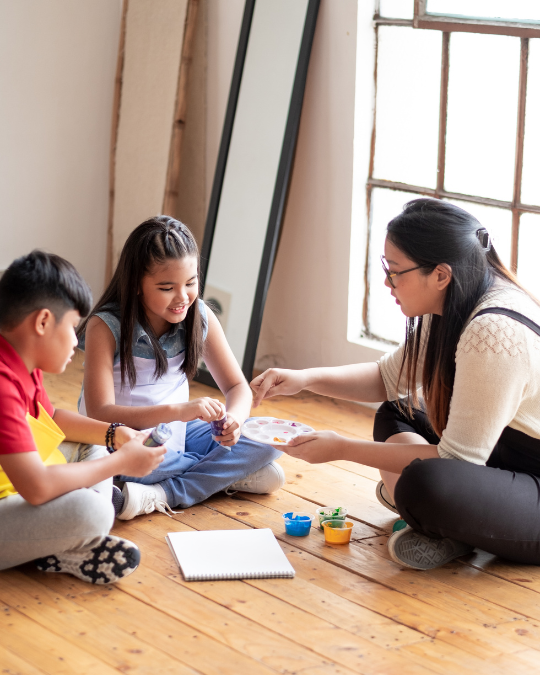
NeuroCore recommends beginning with low-pressure, structured one-to-one interactions built around a defined, predictable activity. Inviting one peer to draw together, build something, look through a book, or engage in a favourite shared interest removes the ambiguity of open-ended socialising and gives both children a clear, comfortable framework for the interaction.
Equally important: keep these early interactions short. Twenty to thirty minutes of genuinely positive shared experience is a significant clinical success — far more valuable than a two-hour playdate that ends in exhaustion and dysregulation. Quality of connection always outweighs duration.
Model Social Self-Advocacy Openly
Children learn how to navigate their social world as much from observing the adults around them as from direct instruction. One of the most powerful things a parent can do to support a neurodivergent child's social confidence is to model self-advocacy openly and without shame.
If you are in a loud environment and feeling overwhelmed, say so: "It is very noisy in here — I think I need to step outside for a few minutes to feel better." If you need a moment of quiet at a social gathering, take it visibly and name it. If you choose to leave a situation that feels like too much, explain why.
When your child consistently sees the adults they trust prioritising their own sensory and emotional needs without embarrassment, they learn something foundational: advocating for your own comfort is a strength, not a weakness. This belief, embedded early, is one of the most protective things a neurodivergent child can carry into social situations.
Your Child Is Already Enough
At the heart of every social strategy NeuroCore uses is a belief we hold without reservation: your child does not need to change who they are to deserve friendship. They need support in finding the people, the environments, and the entry points that allow who they already are to be seen and valued.
The friendships that serve a neurodivergent child best are not the ones built on masking and performance. They are the ones built on shared genuine interest, mutual acceptance, and the freedom to be entirely themselves. Our role at NeuroCore is not to train your child into social acceptability. It is to help create the conditions where those authentic connections can grow.
How NeuroCore Supports Social Development in Dubai
If you would like support understanding your child's unique social profile, identifying the right peer environments, or building a social development plan that honours their authentic personality, NeuroCore's clinical team is here to partner with you every step of the way.
If you have concerns about your child's development, consult our BCBA or your pediatrician.