How to Help My Child Communicate Their Needs
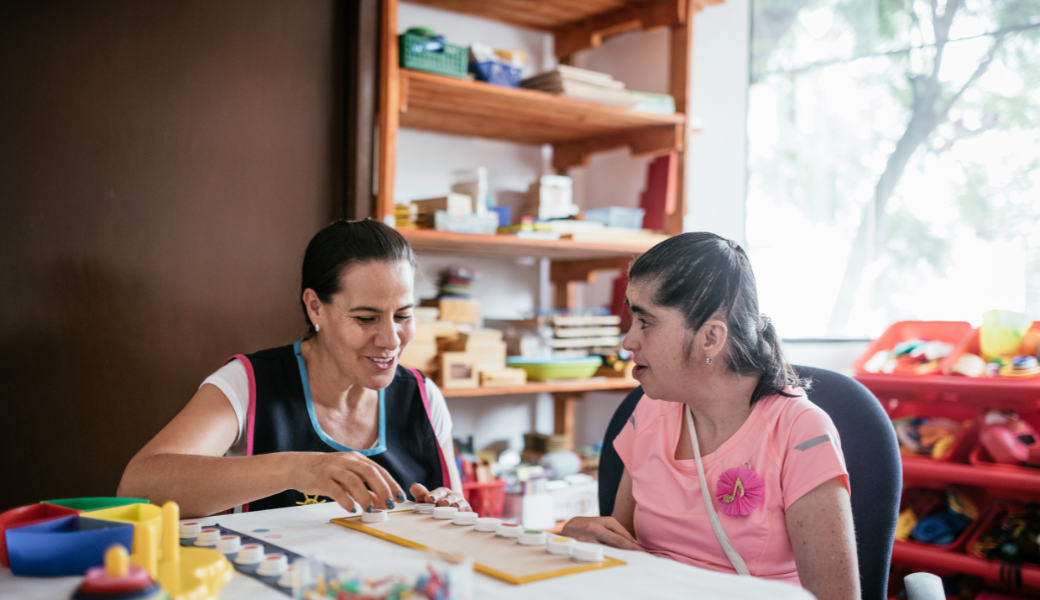
Communication is the foundation of everything, independence, self-advocacy, emotional regulation, and the ability to participate meaningfully in daily life. For many children, the inability to clearly express needs is the single most significant source of daily frustration. Not being able to communicate that a room is too loud, that a task feels too hard, that they want a specific food or simply need a moment alone, this gap between what a child needs and what they can convey drives a significant portion of the challenging behaviour families bring to NeuroCore.
At NeuroCore, helping a child communicate their needs is never just about teaching words. It is about providing a reliable, functional, and dignified way for a child to influence their own world. When a child discovers that they have the power to change what happens around them through communication — that their signal consistently produces a response, their confidence grows and their reliance on less effective expressions of need, such as grabbing, crying, or shutting down, decreases naturally over time.
Step One: Validate Every Form of Intentional Communication
Communication rarely begins with sentences. For most children, it begins much earlier and much more simply — with a gesture, a look, a reach, or a push.
If your child points toward a toy, reaches for a bottle, or moves toward a door, they are already communicating. They are telling you exactly what they want, in the clearest way currently available to them. The most important thing a caregiver can do in these moments is respond — consistently, promptly, and clearly.
When a child reaches for a toy and you say "you want the car" and provide it, you are teaching them something foundational: my action produces this result. My signal works. Over time, this consistent loop — intent, expression, response — builds the communicative logic that underlies all further language and AAC development. At NeuroCore, we always begin here, regardless of a child's current level of communication.
Step Two: Match the Communication Tool to the Child
As communication development progresses, it is essential to provide tools that are genuinely matched to your child's current abilities and sensory profile — not tools that require more than they can currently manage.
For some children, this means simple signs or gestures that carry clear, consistent meaning. For others, a visual choice board — where the child points to a picture representing a preferred activity or item — provides the structure and predictability needed to communicate with confidence. For many neurodivergent children, an Augmentative and Alternative Communication (AAC) system, such as a tablet-based communication app or a picture-based book, is genuinely transformative.
AAC removes the motor-planning and processing demands of speech production while still allowing a child to express complex, nuanced needs. At NeuroCore, we assess which communication tools best fit each child's profile, ensuring that whatever system is introduced is easy to use, always within reach, and reliable across home, school, and community settings. A communication tool that only works in therapy is not yet a functional communication tool.
Step Three: Create Natural Communication Opportunities Throughout the Day
Some of the most effective communication teaching happens not in formal sessions but in the ordinary moments of daily life — and the key is structuring those moments to invite communication rather than bypass it.
Rather than opening the snack cupboard and handing your child what they always have, pause and offer a clear binary choice: "Do you want the apple or the crackers?" This structured, low-demand opportunity gives the child a concrete, achievable way to exercise their voice. It is far more accessible than an open-ended "what do you want?" which can be cognitively and linguistically overwhelming for a child who is still building their communication repertoire.
NeuroCore calls these structured daily moments communication opportunities — and when they are woven consistently into the natural rhythm of the day, they produce far more transferable communication skills than any isolated training exercise can.
Step Four: Teach the "No" Just as Much as the "Yes"
Many communication programmes focus heavily on helping children request preferred items — teaching "more," "want," and "please." At NeuroCore, we are equally committed to teaching a child to communicate their negative needs: the "no," the "I need a break," the "this is too much."
True independence and self-advocacy require both directions of communication. A child who can only request what they want but cannot signal when they are overwhelmed, when a task exceeds their current capacity, or when they simply need to be left alone has only half the communicative toolkit they need.
When we consistently respect and honour a child's "no" signals — when stepping back from a task or requesting a break is met with an immediate, respectful response — we teach that child something profound: their boundaries matter. Their experience of the world is valid. And they do not need to escalate to a meltdown to make that felt.
Step Five: Be Your Child's Most Responsive Communication Partner
The final and most important element of supporting a child's communication is the quality of the response they receive. Every communication tool and every teaching strategy depends, ultimately, on a communication partner who listens, waits, and responds.
Waiting — giving a child the time and space to navigate their AAC device, formulate a gesture, or find the right sign — is one of the most valuable things a caregiver can offer. That space is where real communicative development happens. Jumping in too quickly, finishing their thought, or bypassing the tool to provide what they seem to want removes the very opportunity the child needs to practise using their voice.
At NeuroCore, we coach families in becoming responsive, patient communication partners — because the most sophisticated clinical plan in the world only produces results when it is implemented by someone who genuinely makes space for the child's voice every time.
How NeuroCore Can Help
If you would like support identifying the right communication tools for your child, building a communication-rich home environment, or developing a plan that empowers your child to advocate for their own needs, NeuroCore's clinical team is here to partner with you every step of the way.
If you have concerns about your child's development, consult our BCBA or your pediatrician.