How Does ABA Therapy Work for Autism?
If you are new to the world of autism support, Applied Behavior Analysis is a term you will come across constantly. It appears in diagnostic reports, in school recommendations, in conversations with other parents, and in the advice of paediatricians. But what it actually means, what it looks like in practice and why it works, is rarely explained as clearly as it should be.
This guide gives you a straightforward, honest answer.
What ABA Actually Is
Applied Behavior Analysis is a science of behaviour. It is based on the understanding that behaviour is influenced by the environment, that it serves a purpose for the person doing it, and that new skills and behaviours can be taught systematically through structured teaching strategies and consistent reinforcement.
In plain terms, ABA looks carefully at what a child does, why they do it, and what the environment around them can do differently to help them learn new skills and reduce behaviours that are getting in the way of their daily life.
It is not a single technique or a fixed programme. It is a framework, a way of understanding behaviour and designing teaching strategies, that is applied differently for every child based on their specific profile, their family's goals, and the environments they live and learn in.
What Happens in an ABA Session
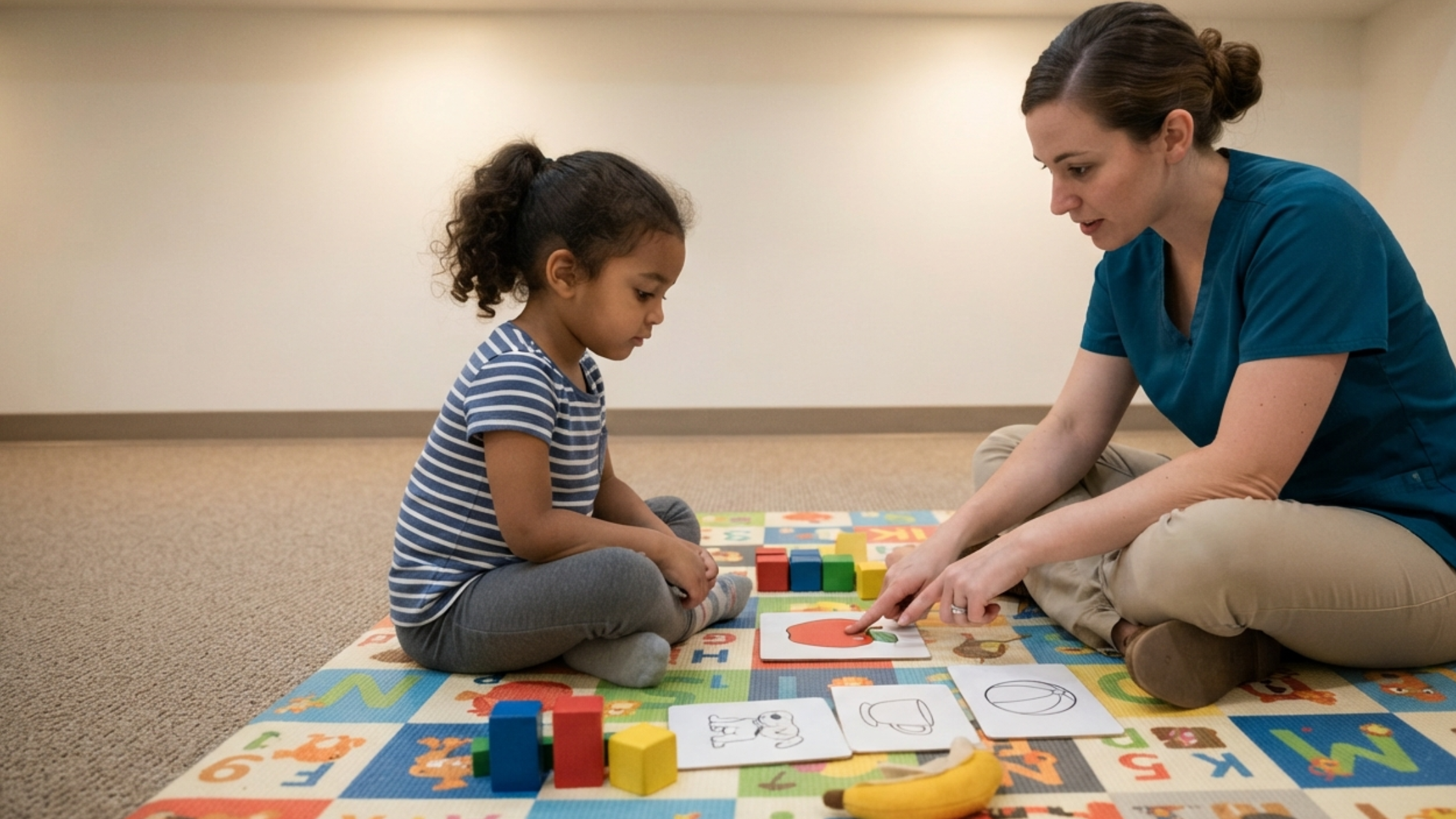
ABA sessions look different depending on the child's age, their goals, and the setting in which the therapy is delivered. For most children, particularly young children, sessions are play-based and follow the child's interests rather than looking like formal instruction.
A typical session might begin with a few minutes of free play to build rapport and help the child settle into the session. From there the therapist moves into structured activities that target specific goals on the child's treatment plan. These might include communication activities, social skill practice, daily living skill building, or working on reducing a specific behaviour that is causing significant difficulty.
Throughout the session the therapist collects data. Not in a way that disrupts the flow of the interaction but consistently and accurately, recording whether the child achieved each target on each attempt. This data is what the supervising clinician uses to evaluate progress and adjust the programme over time.
Sessions typically end with a preferred activity, something the child genuinely enjoys, which maintains the positive association with therapy and sends the child out of the session on a good note.
Why ABA Works
The reason ABA produces results is not mysterious. It works because it identifies specifically what a child can and cannot yet do, builds a plan around closing that gap, and then delivers that plan consistently and systematically with ongoing data to confirm whether it is working.
Most children learn through the ordinary experiences of daily life. They watch others, they try things, they receive feedback and they adjust. For many children with autism, this incidental learning process is less efficient. Skills that typically developing children pick up almost automatically need to be taught more explicitly, with more repetition, more structured feedback and more deliberate reinforcement.
ABA provides that structure. It makes the teaching process explicit, consistent and measurable in a way that allows it to be adjusted continuously based on how the child is responding.
What ABA Targets
ABA therapy can address a wide range of goals depending on what a child needs most. Common target areas include communication, which might mean building verbal language, teaching sign language, or supporting a child to use an AAC device. Social skills, which might mean learning to take turns, initiate interaction with a peer, or understand what another person is feeling. Daily living skills such as dressing, toileting, eating and personal hygiene. Learning readiness skills such as sitting and attending, following instructions and transitioning between activities. And reducing specific behaviours that are significantly interfering with the child's daily life or safety.
Every child's treatment plan is built around their specific profile and their family's priorities. There is no standard ABA programme applied to all children with autism. The science is consistent but the application is always individualised.
What Makes ABA Different From Other Approaches
Several things distinguish ABA from other approaches to autism support.
It is evidence-based. The research base behind ABA is extensive and spans decades. It is recognised by major health and clinical bodies internationally as an effective intervention for autism.
It is data-driven. Every clinical decision in ABA is made based on objective data rather than impression or assumption. Progress is measured, not assumed.
It is individualised. Every programme is built around the specific child, their specific goals, and the specific environments where support is needed.
It is collaborative. Quality ABA involves parents and caregivers as active participants rather than passive observers. The strategies used in sessions are extended into daily life, which is what makes the skills transfer and last.
How NeuroCore Delivers ABA in Dubai
At NeuroCore, ABA therapy is delivered in the environments where your child actually lives, in their home and in their school, rather than in a clinical setting removed from real life. Every programme is supervised by an experienced senior clinician, built around your child's specific profile, and reviewed and adjusted regularly based on real progress data.
If you would like to understand what an ABA programme would look like for your child specifically, our clinical team is here to talk you through it.
If you have concerns about your child's development, consult our BCBA or your pediatrician.