What to Pack in Your Child's School Bag to Support Sensory Needs
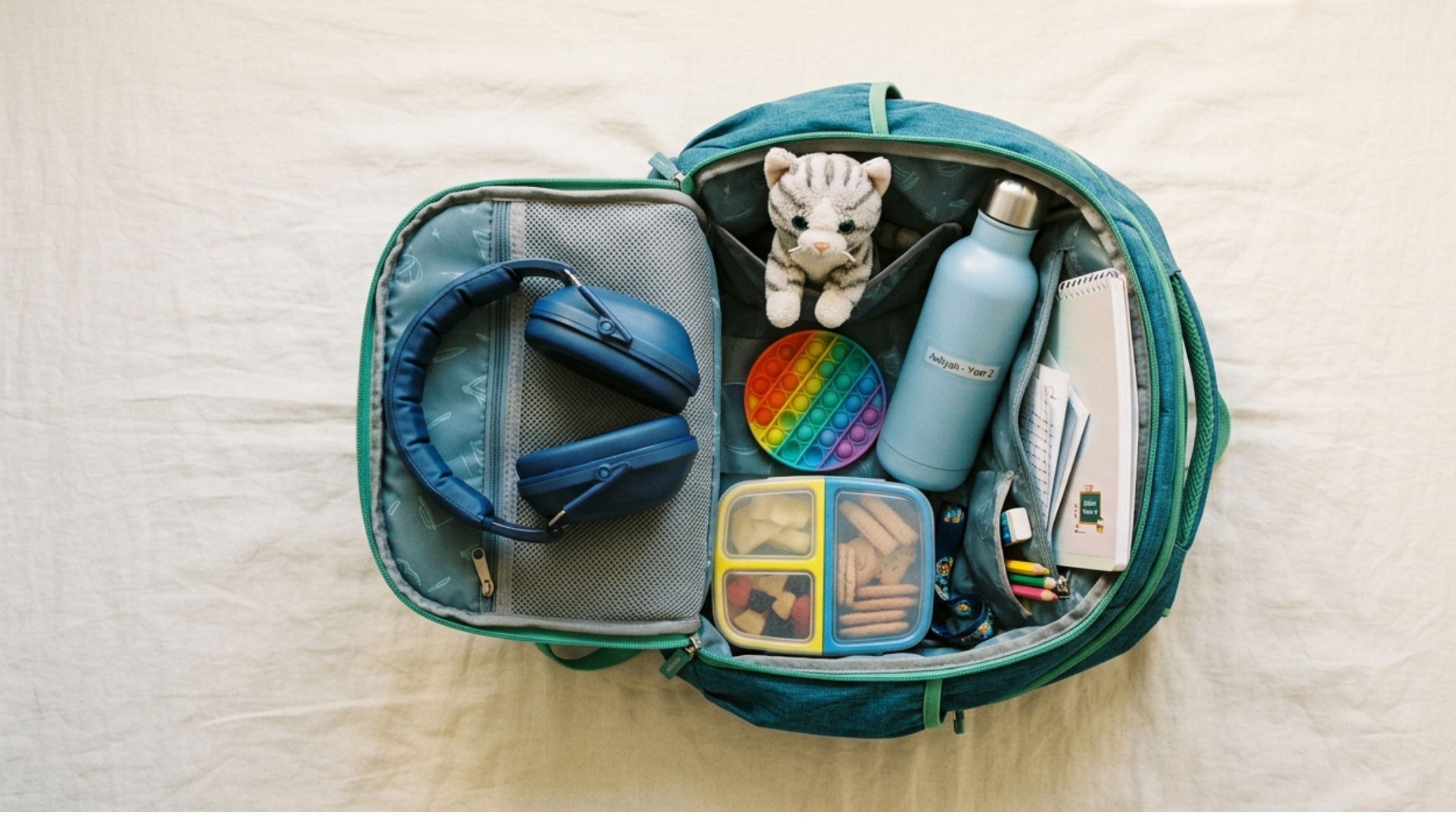
The school bag your child carries on 25th August is more than just lunch and stationery. For a child with autism, it can also carry the tools that make the difference between a regulated school day and one that falls apart by morning break.
This guide covers what to consider packing, why each item matters, and how to introduce these tools before the first day so your child knows how to use them when they need them.
Start With What Your Child Actually Needs
Every child's sensory profile is different. What helps one child regulate may be irrelevant or even counterproductive for another. Before you buy anything new, think about what your child actually finds calming or regulating at home and in other environments.
What do they reach for when they are stressed? What do they do with their hands when they are trying to focus? What helps them transition more smoothly? What makes the physical discomfort of a noisy or bright environment more manageable?
The answers to those questions are your shopping list. Not a generic list of sensory tools from the internet.
Ear Defenders or Noise-Reducing Earphones
For children who are sensitive to noise, a pair of child-sized ear defenders or noise-reducing earphones can significantly reduce the sensory load of a school day. Corridors between lessons, the cafeteria at lunch, the playground at break. These are some of the loudest environments your child will move through during the day.
Having ear defenders in the bag does not mean your child will wear them constantly. It means they have access to them when the noise becomes too much. That option, available when needed, reduces anxiety even on the days it is not used.
Make sure your child has practised wearing them at home before the first day. They should feel familiar, not new and strange, the first time the environment demands them.
A Familiar Sensory Object
A small, familiar object from home that your child can hold or touch when they feel overwhelmed provides what some clinicians call a sensory bridge. Something that connects the safety of home to the demands of the school environment.
This might be a small smooth stone, a piece of fabric with a familiar texture, a tiny soft toy that fits in a pocket, or a simple fidget tool your child already uses at home. The specific object matters less than the fact that it is familiar and that your child associates it with feeling calm.
Keep it small enough to fit in a pocket or a small pouch inside the bag. Something discrete enough that using it in class does not draw attention.
A Fidget Tool
Fidget tools are not toys and they are not distractions. For many children with autism, having something to do with their hands while listening or sitting helps them regulate well enough to stay present and focused on the lesson.
The right fidget tool is one your child already uses effectively. If you are introducing a new one before school starts, give them time to get used to it at home first. A fidget tool they have never used before is just a new object that requires attention on an already demanding first day.
If your child's school has a policy on fidget tools in the classroom, check it before packing one and have a conversation with the teacher or learning support team about the clinical reason your child benefits from using one.
A Visual Schedule or Cue Card
If your child uses a visual schedule at home and it helps them manage transitions, consider whether a portable version could go in their bag.
This might be a laminated card showing the sequence of the school day. Or a small set of picture cards they can refer to when they are feeling uncertain about what is coming next. Having something visual they can pull out and look at independently gives them a tool for self-regulation that does not require finding an adult.
Talk to the school before term starts about whether this is something the teacher can support your child to use during the day.
Snacks That Work for Your Child
Hunger and blood sugar drops affect regulation in every child. For children with autism who may also have restricted food preferences, the risk of arriving at lunchtime having eaten nothing because the school provided something unfamiliar is significant.
Pack a snack your child reliably eats. Something familiar, preferred, and in a container they can open independently. A child who is hungry by ten in the morning has significantly less capacity for the sensory and social demands of the rest of the school day.
Check the school's policy on snacks and whether your child is allowed to eat something during break if needed.
A Water Bottle They Will Actually Use
Dehydration affects concentration and regulation. Pack a water bottle your child already uses at home, in a colour or design they like, that they know how to open without help.
A new water bottle that requires figuring out a different mechanism on the first day of school is a small but unnecessary friction point. Familiar is always better in the first weeks.
A Note About Labels and Communication
If your child uses any communication tools, such as a communication device, picture exchange cards, or a specific communication book, make sure these are in the bag and that the school knows what they are and how to respond when your child uses them.
A communication tool that goes home in the bag every afternoon and comes back to school every morning needs to be part of a clear system that both home and school understand and follow consistently.
Introduce Everything Before the First Day
Whatever goes in the bag, make sure your child has seen it, touched it, and ideally used it before 25th August. Nothing in that bag should be new and unknown on the first day.
Spend some time this week going through the bag together. Name each item. Talk about what it is for. Let your child handle it. If they are resistant to something, find out why before school starts rather than discovering the resistance at the school gate.
How NeuroCore Can Help
If you are not sure which sensory tools would genuinely help your child or how to introduce them effectively, our clinical team can help you work that out as part of your child's support plan.
If you have concerns about your child's development, consult our BCBA or your pediatrician.