How ABA Therapy Helps Children With School Anxiety
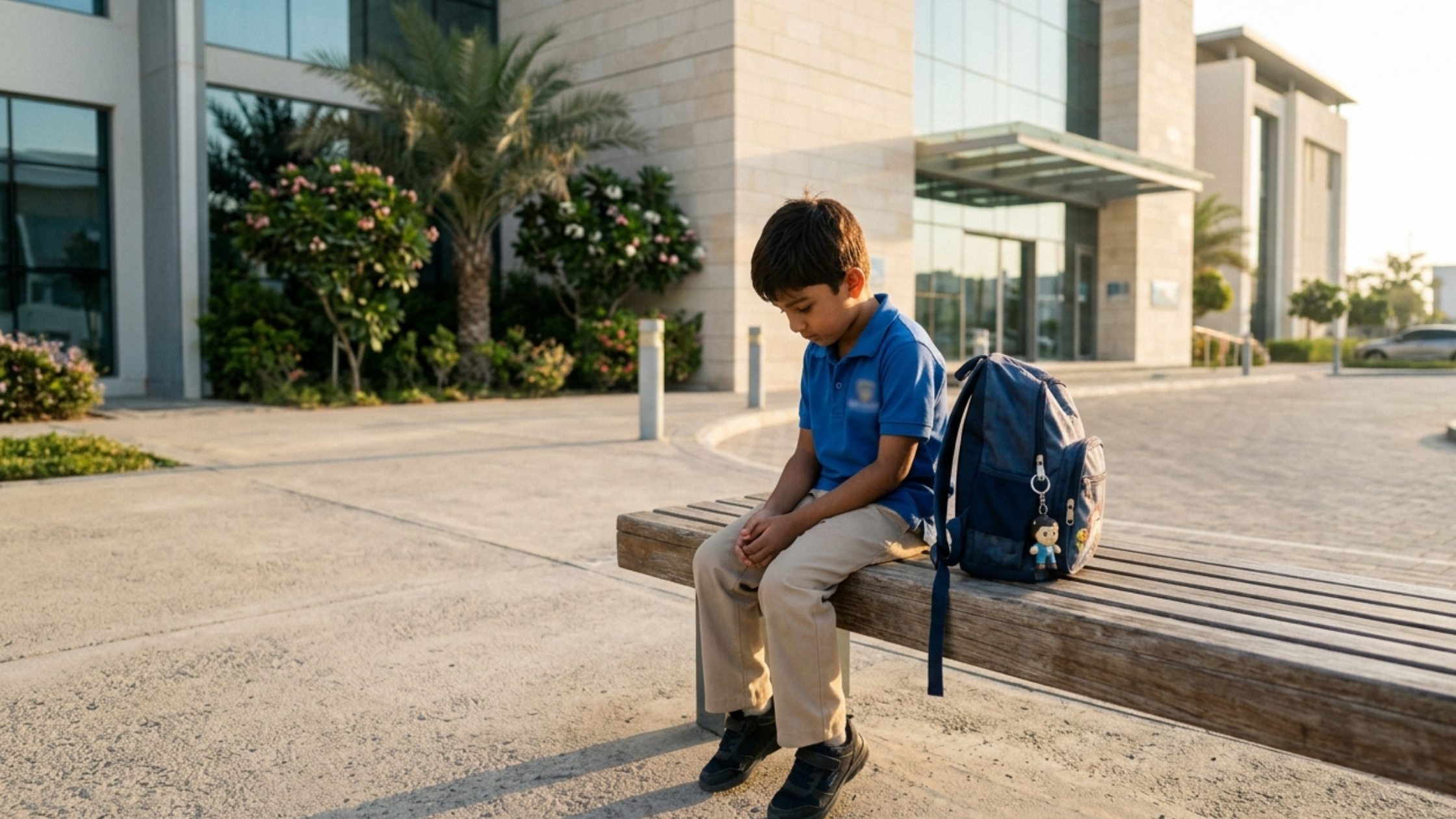
School anxiety in children with autism is one of the most common and most exhausting challenges families bring to NeuroCore. The mornings that start with tears before the day has even begun. The stomach aches that appear every Sunday evening. The child who was happy at home all weekend but shuts down completely the moment the school bag comes out.
If this sounds familiar, you are not imagining it and your child is not being dramatic. School anxiety in children with autism is real, it is often significant, and it is very rarely about school itself in the way most people assume.
Why School Is So Hard for Children With Autism
To understand school anxiety, it helps to understand what a school day actually demands of a child with autism.
From the moment they arrive, they are managing a high-sensory environment. Noise from other children, fluorescent lighting, the unpredictable movement of people in corridors, the smell of the cafeteria. All of this is happening before a single lesson begins.
On top of that, the social demands of school are relentless. Reading facial expressions, navigating group work, managing unstructured time during break, following the unwritten rules of peer interaction. These are things many children with autism find genuinely exhausting, not because they do not want to connect with others, but because decoding all of that social information requires significant cognitive effort.
Add transitions between subjects, unexpected changes to routine, the sensory experience of certain classrooms or spaces, and the demand to perform academically across multiple subjects in a single day. By the time a child with autism reaches the end of a school day, they have often been regulating themselves constantly for six or seven hours.
The anxiety that shows up as school refusal, stomach aches, or meltdowns at home after school is frequently the result of that accumulated load, not a sign that something is fundamentally wrong with the child.
What ABA Therapy Does About It
ABA therapy addresses school anxiety from several directions at once, which is what makes it effective where other approaches sometimes fall short.
It identifies the specific triggers. School anxiety is rarely about everything equally. For one child the hardest moment might be the transition from the car to the school gate. For another it is lunch because the cafeteria is overwhelming. For another it is a particular lesson where the demands exceed their current skills. ABA starts by mapping the specific points in the school day where anxiety peaks, because that information drives the intervention.
It builds the skills the child is missing. Sometimes school anxiety is rooted in a genuine skill gap. A child who cannot follow multi-step instructions in a classroom, or who does not know how to ask for help when they are stuck, or who cannot manage the transition between activities without significant distress, is anxious partly because they are repeatedly finding themselves in situations they do not have the tools to handle. ABA builds those tools directly.
It modifies the environment. Not every solution to school anxiety sits with the child. Some of it sits with the school. ABA therapists work alongside teachers and learning support staff to adjust the classroom environment, build transition supports into the school day, and create the predictability and sensory accommodations that reduce the load on the child's nervous system. A child who knows what is coming next, who has a quiet space they can access when they need it, and whose sensory needs are accommodated in the classroom is a child who has significantly less reason to be anxious.
It builds self-advocacy. One of the most powerful long-term tools ABA gives a child with school anxiety is the ability to communicate that they are struggling before they reach a point of crisis. Teaching a child to use a signal, a card, a word, or a phrase that means "I need a break" or "this is too much right now" gives them agency in a situation where they have often felt completely powerless.
It supports parents in working with the school. ABA therapists at NeuroCore work with families to develop the language and evidence they need to have productive conversations with their child's school. What accommodations to ask for. How to explain what is happening in a way that a teacher can act on. How to build a consistent framework between home and school so the child is not navigating two completely different sets of expectations.
What Progress Looks Like
School anxiety does not disappear overnight and any approach that promises otherwise is not being honest with you.
What families typically notice over time is that the mornings get easier. Not perfect, but easier. The child recovers faster after a difficult school day. There are more days that are manageable and fewer that feel catastrophic. The child begins to have language or tools for what they are feeling, rather than the feeling just arriving as a meltdown with no warning.
These shifts are meaningful. They are the result of consistent, targeted work on the specific things making school hard for that particular child. And they tend to build on each other. A child who manages mornings better arrives at school less dysregulated. A child who is less dysregulated at arrival has more capacity for the day ahead. A child with more capacity has more successful experiences. Successful experiences reduce anxiety over time.
What Does Not Help
It is worth naming a few things that tend to make school anxiety worse rather than better, because they are common responses even from caring, well-meaning adults.
Forcing a child through the anxiety without addressing what is driving it tends to increase the association between school and distress rather than reduce it. A child who is dragged through the school gate in tears every morning is not learning that school is safe. They are learning that their distress does not change what happens.
Keeping a child home on difficult days can provide short-term relief but reinforces avoidance over time, making the anxiety harder to address and the return to school more difficult.
Telling a child that school is fine, that nothing bad will happen, or that they are worrying about nothing does not reduce anxiety. It communicates that their experience is not being taken seriously, which tends to increase rather than decrease distress.
None of this means the answer is always to push through. It means the answer is to understand what is driving the anxiety and address that directly, which is exactly what ABA sets out to do.
How NeuroCore Approaches School Anxiety
At NeuroCore, we treat school anxiety as a clinical problem that deserves a clinical solution. We assess what is driving it for each specific child, build a plan that addresses those drivers directly, coordinate with the school to ensure the environment supports rather than compounds the anxiety, and work with families through every stage of the process.
If school is a daily battle in your household right now, our team is here to help you understand why and work out what would actually make a difference.
If you have concerns about your child's development, consult our BCBA or your pediatrician.