How ABA Therapists Work With Schools and Teachers in Dubai
One of the most common frustrations families describe is the gap between what happens in ABA therapy sessions and what happens at school. A child makes real progress at home with their therapist. Then they go to school and the strategies are different, the language is different, the responses to their behaviour are different. And the progress that was building starts to slow.
This gap is not inevitable. When ABA therapists and school staff work together properly, the child experiences a consistent framework across every environment they move through. That consistency is one of the most powerful drivers of progress in ABA practice.
This guide explains how that collaboration works in Dubai and what it looks like in practice.
Why the School Environment Matters So Much
For most children with autism, school is where the highest demands of their day are concentrated. Academic expectations, social complexity, sensory input, repeated transitions, group instruction, unstructured time. All of these happen simultaneously for six or more hours every day.
What a child learns in a home-based ABA session is only fully useful if it transfers into that school environment. A child who can request a break using a communication card at home but has no way to use the same strategy at school has not yet fully acquired the skill. The school environment is where the skill needs to work.
This is why NeuroCore therapists do not treat home-based therapy and school as separate systems. They are two parts of the same picture, and coordination between them is a clinical priority.
What ABA Therapists Actually Do When Working With Schools
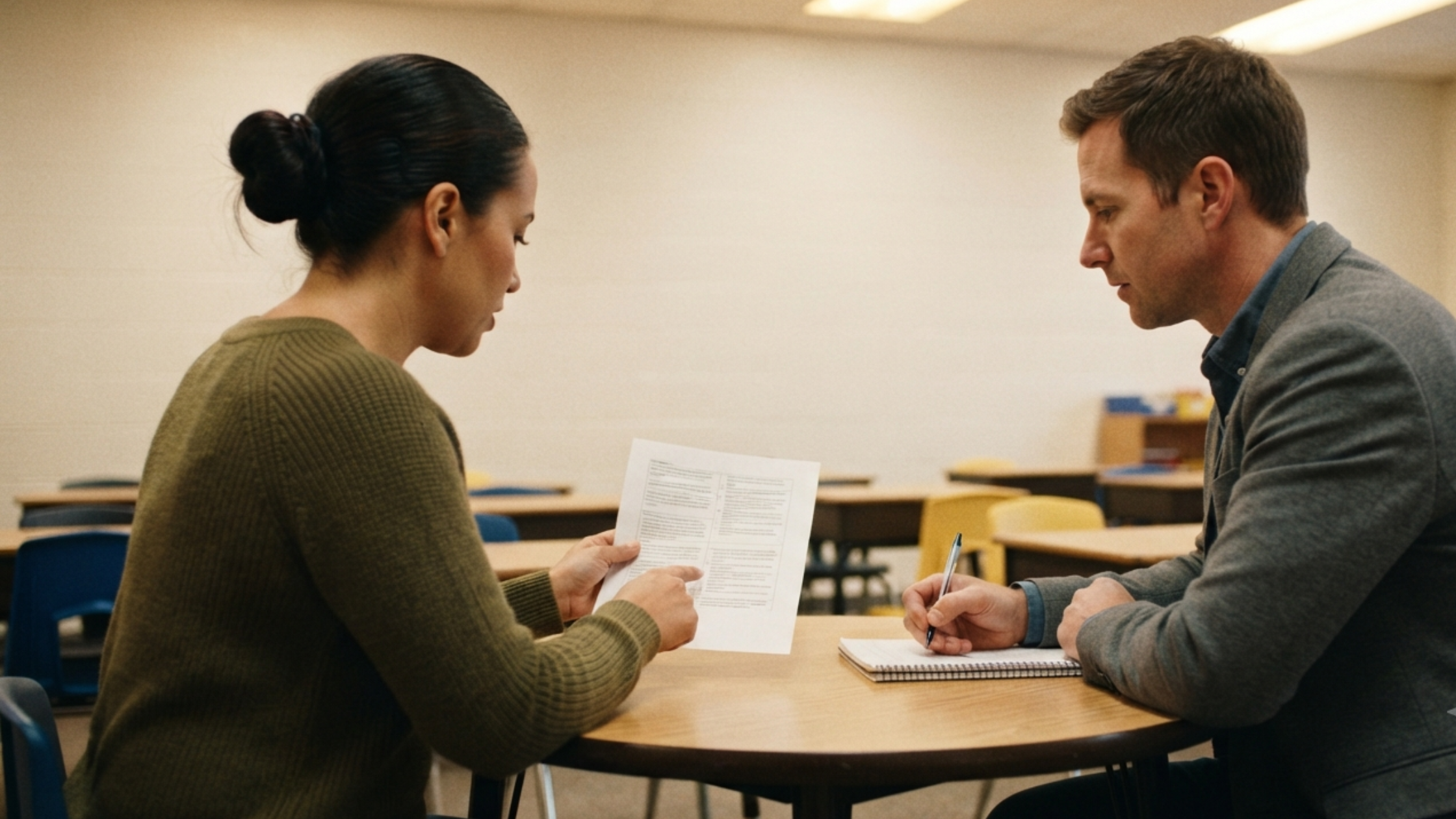
The collaboration between an ABA therapist and a school team is not a one-time meeting or a written report handed over at the start of term. It is an ongoing working relationship built around the child's specific needs.
Sharing clinical information. The ABA therapist communicates what strategies are currently working for the child, what the early signs of dysregulation look like before they escalate, what sensory accommodations are in place, and how the child communicates when they need support. This information gives teachers and learning support assistants the context they need to respond effectively rather than reacting to challenging behaviour without understanding what is driving it.
Translating strategies into classroom terms. A strategy that makes clinical sense in ABA language does not always translate immediately into something a classroom teacher can implement during a lesson with twenty-five other students present. Part of the ABA therapist's role is making sure the strategies they are using can be realistically applied in a school setting, and helping teachers understand how to do that.
Conducting in-school observations. When a child is struggling at school in specific ways, an ABA therapist may observe directly in the classroom environment. This gives the therapist clinical information that simply cannot be gathered from parent reports alone, because behaviour in a school setting is driven by school-specific antecedents that may never appear at home.
Building consistent communication systems. If a child uses a visual schedule at home, coordinating with the school so the same or a similar system is used in the classroom means the child does not have to operate across two completely different frameworks. Consistency in the tools and language used across home and school reduces the cognitive load on the child significantly.
Supporting IEP development. Many children with autism in Dubai have an Individual Education Plan through their school. ABA therapists contribute to this process by providing clinical evidence of the child's current skills, identifying appropriate goals that align with both the school's educational framework and the clinical priorities of the ABA programme, and advising on the supports and accommodations that will help the child meet those goals.
What Good Collaboration Looks Like in Practice
When ABA therapists and school staff are working well together, the child experiences something coherent. The same words are used for the same things. The same strategies appear in the classroom and at home. When the child signals a need, the response is consistent regardless of who they are with or where they are.
Teachers feel equipped rather than left to figure things out alone. They know what the ABA therapist is working on and why. They know what to do when specific situations arise. And they have a clear point of contact when something happens at school that the ABA team needs to know about.
This does not happen automatically. It requires deliberate effort from both sides and a shared commitment to putting the child's needs at the centre of every conversation.
What Gets in the Way
Several things commonly disrupt effective ABA and school collaboration in Dubai. High teacher turnover means clinical information needs to be shared repeatedly with new staff. Busy school schedules make finding time for proper communication difficult. And occasionally there are philosophical differences between how a school approaches behaviour and how ABA approaches it.
At NeuroCore, our therapists are experienced in navigating all of these challenges. We work within the reality of how Dubai schools operate rather than expecting schools to adapt to a clinical model that does not fit their context.
How NeuroCore Works With Schools in Dubai
If your child is currently receiving ABA support through NeuroCore and is also attending school in Dubai, coordinating with their school is a standard part of how we work. We do not treat home sessions and school as separate concerns. We treat them as one programme delivered across two environments.
If you would like to understand how this coordination works in practice for your child's specific situation, speak with your supervising clinician or contact our team directly.
If you have concerns about your child's development, consult our BCBA or your pediatrician.