How ABA Therapists Support Children Who Use AAC as Their Primary Communication
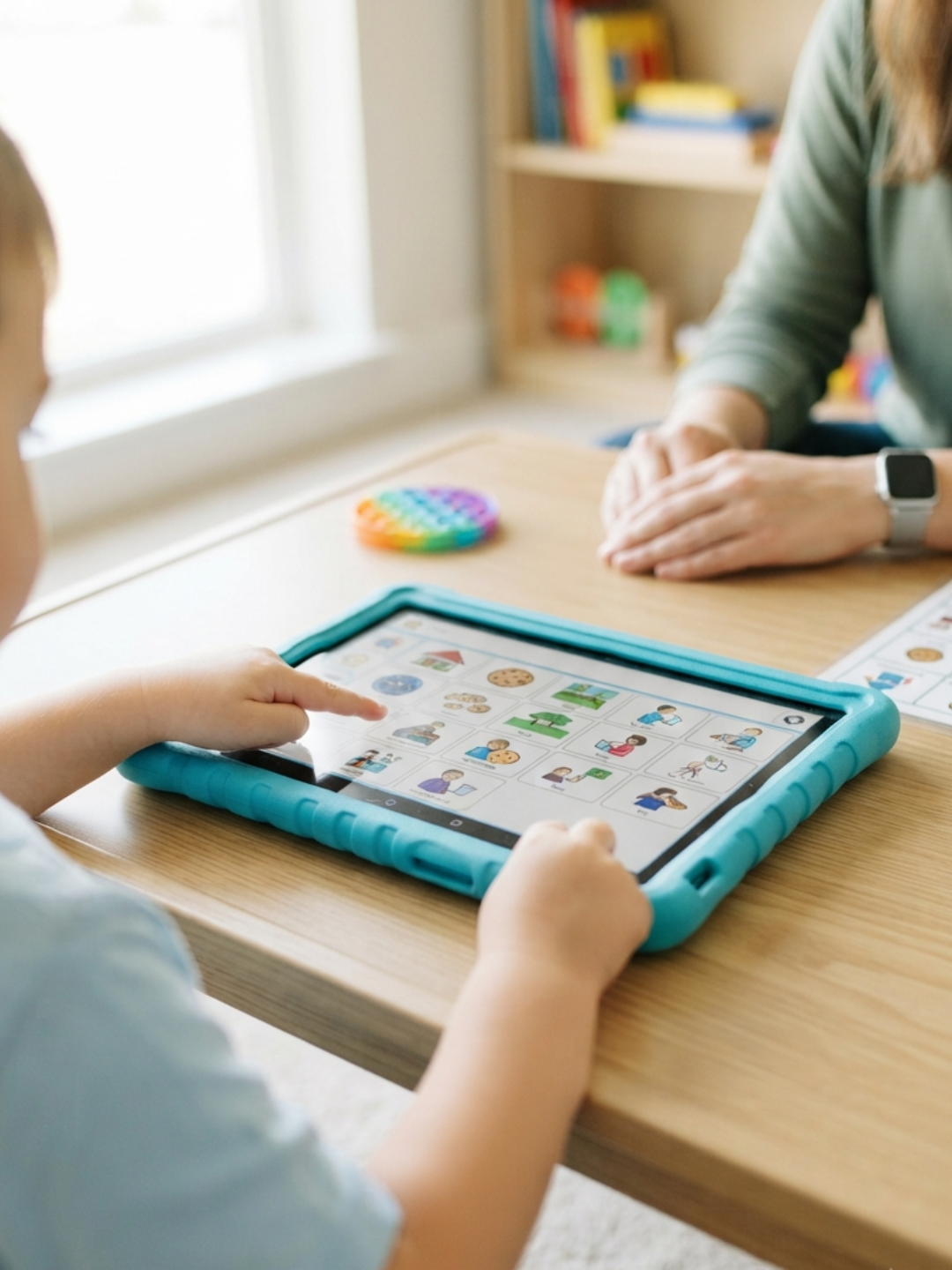
October is AAC Awareness Month. AAC stands for Augmentative and Alternative Communication, and it refers to any method of communication that supplements or replaces spoken words. This includes high-tech options like tablet-based communication apps and dedicated speech-generating devices, as well as low-tech options like picture exchange systems and communication boards.
For many children with autism, cerebral palsy, Down Syndrome, or other conditions that affect speech production, AAC is not a temporary measure or a last resort. It is a fully legitimate and permanent primary communication mode. And for ABA therapists working with children who use AAC, understanding how to support AAC use effectively within sessions is an essential clinical skill.
What AAC Is and Why It Matters
A child who uses AAC to communicate has the same communicative intentions as any other child. They want to request things they want, refuse things they do not want, comment on what they notice, ask questions, make jokes, and share their experience of the world. The difference is that their primary channel for doing this is not spoken language.
The goal of AAC support in ABA therapy is not to get the child to talk instead of using their device. For children whose profile means that spoken language is genuinely not accessible or reliable, AAC may always be their primary communication mode, and that is completely fine. The goal is functional communication: the ability to communicate effectively, reliably, and independently across a range of settings and communication partners.
How to Structure ABA Sessions With an AAC User
The first principle of working with an AAC user in ABA sessions is that the device must be present and accessible throughout the entire session. A communication device that is put away during therapy is not being used as a communication tool. It is being treated as a reward or a separate activity. The device goes everywhere the child goes and is available at all times.
Session targets for an AAC user are typically drawn from the same domains as targets for any other ABA client: requesting, commenting, social interaction, daily living skills. The difference is that the communication goals within these targets are framed in terms of AAC use rather than verbal output. The target is not say the word but use the device to communicate the concept.
When targeting requesting skills with an AAC user, create genuine communication opportunities rather than artificial practice trials. A child who is shown a picture of a toy and asked to request it using their device has been given a teaching trial. A child who wants to access a toy that has been placed out of reach and uses their device to request it has been given a real communication opportunity. The second scenario is more motivating, more naturalistic, and more likely to produce generalised communication.
Modelling: The Most Important Thing You Do With an AAC User
The most powerful thing an ABA therapist can do to support AAC development is to model the use of the device consistently throughout every session. This means using the child's own device to communicate throughout the interaction, not just when you are prompting the child to use it.
When you model, you show the child that the device is a genuine communication tool that adults use to communicate, not just a device for children to press when adults tell them to. You show them how fluent, functional AAC communication looks. And you give them repeated exposure to the symbols and the language of the device in meaningful communicative contexts.
Modelling does not mean narrating everything you do. It means using the device naturally and meaningfully as part of real communicative exchanges throughout the session.
Prompting AAC Use Without Undermining Independence
A common mistake in working with AAC users is over-prompting. A child who is constantly prompted to use their device before they have had time to initiate independently learns that they should wait for the prompt rather than initiating communication on their own.
Use the least intrusive prompt available. If a child is reaching toward a preferred item and looking at their device, wait a few seconds before prompting. If they use the device independently, respond immediately and enthusiastically. If they do not initiate, offer a light indirect prompt such as positioning yourself near the device or looking at it expectantly, before moving to a more direct prompt.
Always fade prompts systematically. A child who requires full physical guidance to use the device today should be progressing toward partial physical guidance, then gestural guidance, then independent use over time, with the fading schedule built into the programme and monitored through data.
Generalising AAC Use Across Settings and People
One of the most important ABA targets for AAC users is generalisation. A child who uses their device reliably with their therapist but not with their parents, teacher, or peers has not yet acquired the skill fully. The device needs to work as a communication tool across all settings and communication partners.
This means involving parents and school staff in AAC coaching as a standard part of the ABA programme. Parents need to know how to respond to AAC communication, how to create opportunities for their child to use the device, and how to model device use themselves. Teachers and learning support assistants need the same understanding.
How NeuroCore Supports AAC Users
At NeuroCore, AAC support is fully integrated into our clinical approach. When a child on our caseload uses AAC, the entire clinical team is aligned around supporting that child's communication in every session and every environment.
Visit our IBT and ABAT Training page to learn more or enrol now and find out when our next live sessions are scheduled.