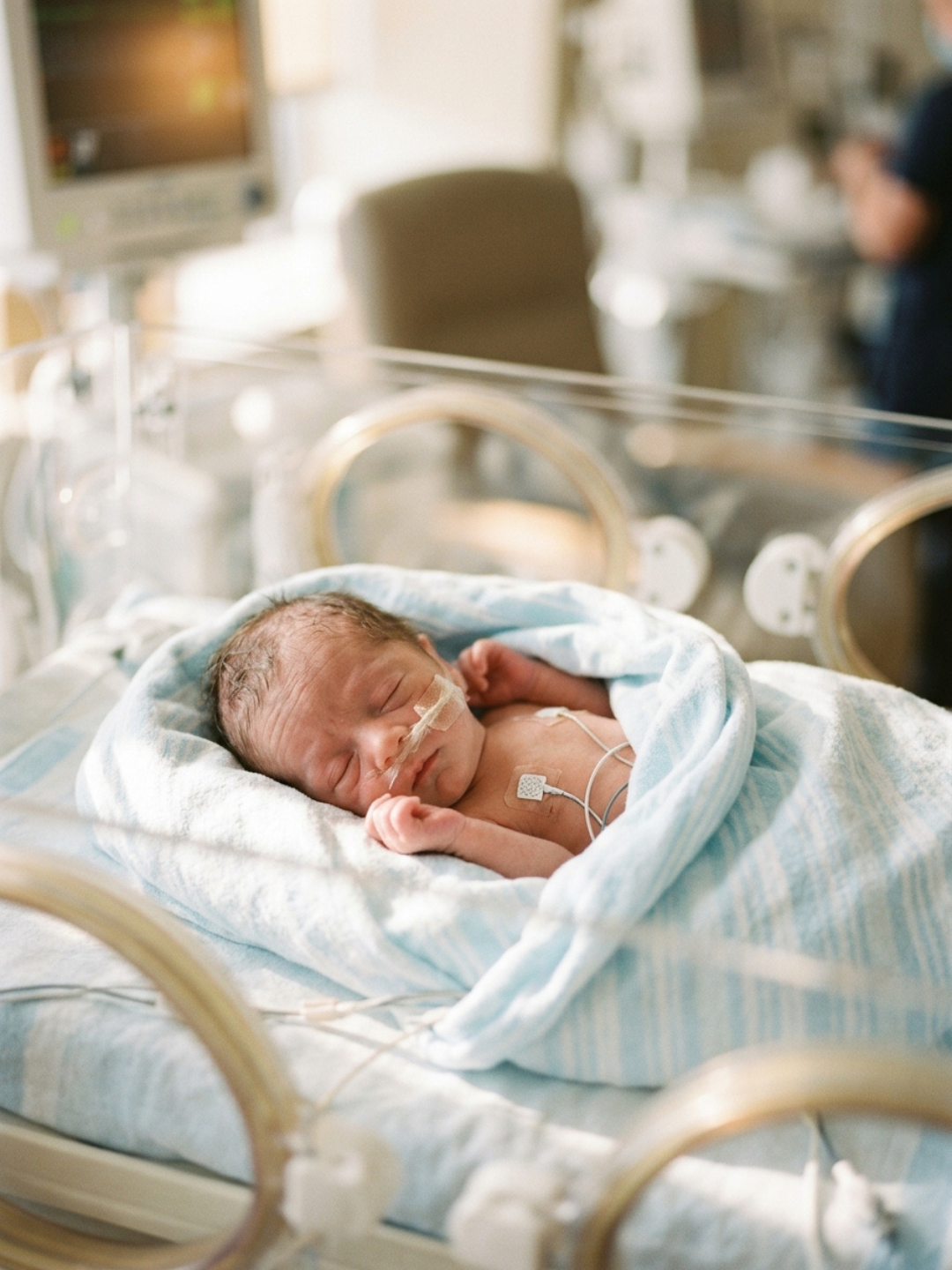
Premature Birth Awareness Month in November is an opportunity to address something that classroom teachers in Dubai encounter more often than they might realise. Among the students who present with learning differences, attention difficulties, language delays, or sensory sensitivities that do not fit neatly into any single diagnostic category, a significant proportion have a premature birth history that is clinically relevant to understanding their profile.
Understanding how prematurity has shaped a student’s developmental trajectory changes how a teacher responds to that student’s difficulties and increases the effectiveness of the support they can provide.
Recognising the Developmental Fingerprint of Prematurity
Students whose development was affected by premature birth often present with a combination of differences that spans several developmental domains rather than being concentrated in one area.
Attention difficulties that look like ADHD but may be part of a broader regulatory profile related to early nervous system immaturity. Language processing differences where the student understands spoken language but processes it more slowly than peers, or where they have difficulty with complex multi-step instructions. Fine motor differences that affect handwriting, drawing, and practical tasks in ways that can be mistaken for poor effort. Sensory sensitivities that affect the student’s capacity to regulate in a busy classroom environment. And social processing differences that can range from mild to significant depending on the degree of neurological impact.
These students may not have a formal diagnosis beyond perhaps developmental delay or they may carry multiple diagnoses. What they share is a developmental profile that responds well to the same ABA-informed classroom strategies that support students with autism, ADHD, and other neurodevelopmental differences.
ABA Strategies That Make the Most Difference
Reduce instruction complexity and quantity. Students with premature birth-related processing differences benefit from clear, single-step instructions delivered one at a time with a pause to allow processing before the next instruction is given. Multi-step instructions presented verbally and rapidly are difficult to hold in working memory for students whose short-term auditory memory is less robust than peers.
Use visual supports consistently. Pairing visual information with verbal instruction, providing written or visual summaries of key points, and using task checklists that allow the student to self-monitor their progress through a task all reduce the reliance on auditory working memory and processing speed that these students may find effortful.
Build in movement and regulation breaks. Students with premature birth-related attention regulation differences benefit from regular, brief movement breaks during sustained academic work. These are not rewards for good behaviour. They are physiological support for a nervous system that has limited sustained attention capacity and needs regular reset opportunities to maintain engagement across a school day.
Reinforce effort and persistence specifically. Students who are working harder than their peers to achieve the same academic outcomes benefit greatly from teachers who notice and name that effort specifically. You kept going even when that felt difficult is a more clinically useful reinforcer for this population than well done.
Adjust the pace of instruction. Students who process more slowly than peers need slightly more time to respond to questions, to transition between activities, and to demonstrate understanding. Building deliberate wait time into classroom interactions, without filling the silence with additional verbal information, gives these students the processing time they need.
How NeuroCore Supports Schools With This Population
NeuroCore works with schools across Dubai to build ABA-informed support for students with complex developmental profiles including those related to premature birth. When we work with a child who has a premature birth history, our clinical assessment and programme design always account for the specific developmental fingerprint that history has produced.
If you have concerns about a student’s development, encourage the family to consult our BCBA or their pediatrician.