The Importance of Functional Communication: Giving Every Child a Voice
At NeuroCore, there is one thing we hear from parents more than almost anything else: "I just want my child to be able to tell me what they need."
It is said in so many different ways. Sometimes it comes with exhaustion — after months of guessing, interpreting, getting it wrong. Sometimes it comes with grief — for the conversations a parent imagined having with their child that haven't happened yet. Sometimes it comes with hope — the quiet, determined belief that their child has so much to say, if only the right bridge could be found.
This is the heart of what we do at NeuroCore. And it is why functional communication — the ability to share thoughts, needs, and feelings in a way that allows a child to genuinely influence their own world — sits at the centre of every programme we build.
Communication Is More Than a Skill. It Is Identity.
In clinical practice, it is easy to speak about communication as a developmental skill to be taught, measured, and generalised. And technically, that is accurate. But it misses something essential.
When a child develops the ability to reliably communicate — to say yes or no, to ask for what they need, to signal when something is too much, to share what brings them joy — they are not just acquiring a tool. They are stepping into their identity. They are becoming someone whose inner world can be known by the people around them. Someone whose preferences matter and can be acted on. Someone who exists, fully, in relationship with others.
At NeuroCore, we hold this understanding in everything we do. We are not teaching communication for its own sake. We are building the bridge between who a child is on the inside and how that self can be expressed, recognised, and valued in the world.
Every Voice Is Valid
One of the most important things NeuroCore establishes with every family from the very beginning is this: verbal speech is not the only valid form of communication. It is one form — and for many neurodivergent children, it is not the primary or most accessible one.
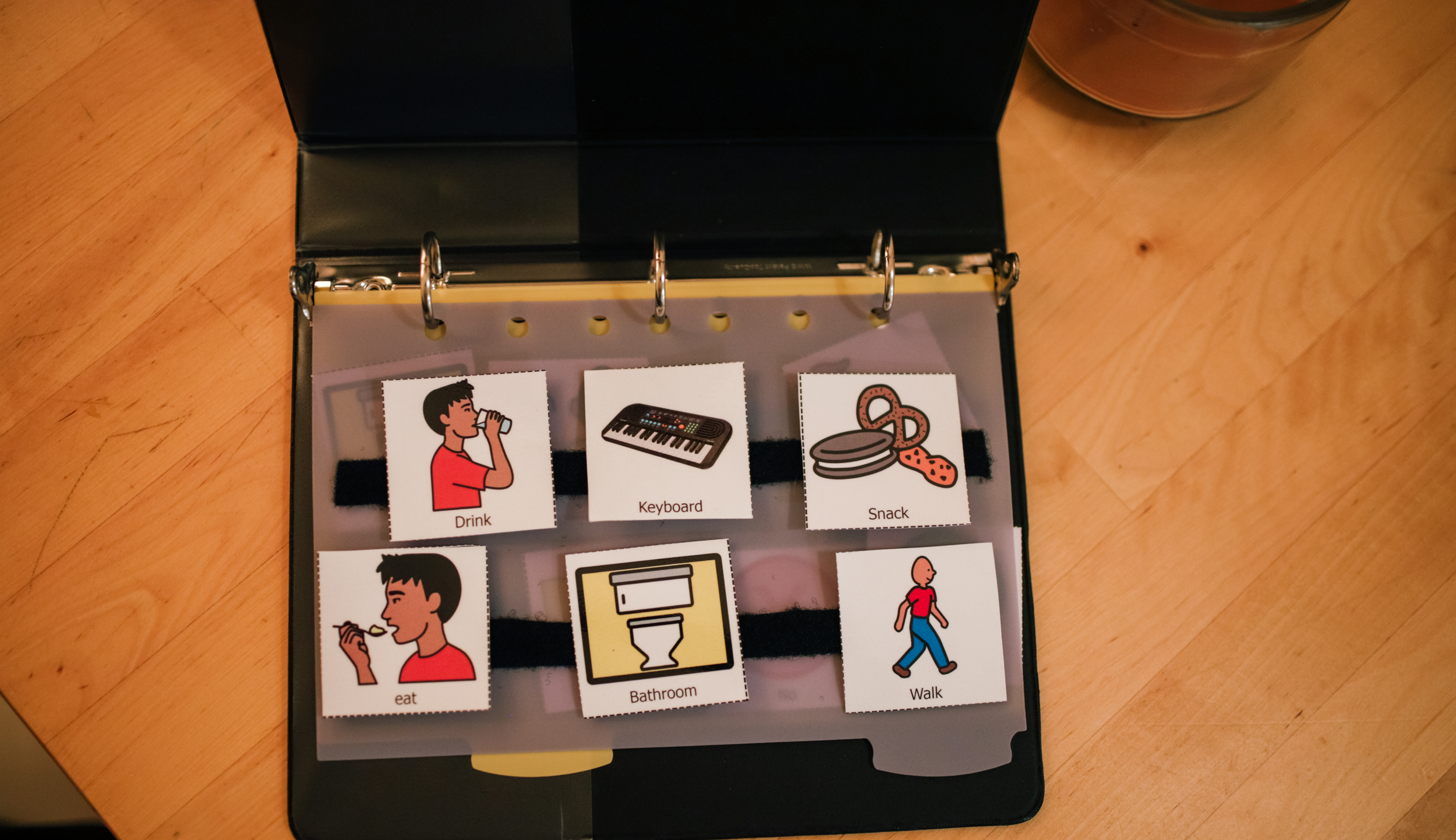
Sign language, gesture, picture-based systems, AAC devices, communication apps — all of these are genuine, complete, and fully valid means of expression. A child who communicates through a tablet-based AAC system is not using a lesser substitute for "real" communication. They are communicating. Their voice simply has a different form.
Our neuro-affirming approach celebrates all of these expressions equally, and our clinical goal is always to identify the communication system that is most natural, most accessible, and most reliable for each individual child — then ensure that system works not just in a therapy session, but at home, at school, in the playground, and in every context that matters to that child's life.
Communication as the Foundation of Behavioural Wellbeing
There is a dimension of functional communication that goes beyond expression into something more fundamental: safety.
Many of the behaviours that cause families and educators the greatest concern — meltdowns, aggression, withdrawal, persistent avoidance — are not primarily behavioural problems. They are communication problems. They are a child whose internal experience of the world — the overwhelm, the need for space, the desire to participate, the pain of being misunderstood — has no other reliable outlet.
When a child learns to request what they need before frustration reaches its peak, the need for those escalating behaviours decreases naturally. Not because the child has been managed or corrected, but because the underlying need is now being met through a more efficient, more dignified channel. They have found a way to be heard that works.
This is why functional communication development is never a secondary goal at NeuroCore. It is almost always the first one.
A Journey That Looks Different for Every Child
For a 15-month-old, functional communication might mean learning to reach consistently toward a preferred toy rather than crying with frustration. For a four-year-old, it might mean using a picture card to request a break when the sensory input of a busy room becomes too much. For a teenager, it might mean using a digital device to articulate complex feelings about a difficult social experience at school — feelings that have always existed, but have had no reliable outlet until now.
The timeline is different. The tools are different. The goals are different. But the underlying purpose is the same at every age and every stage: ensuring that every child at NeuroCore has the opportunity to be genuinely heard, understood, and valued for exactly who they are.
What It Looks Like When Communication Takes Root
The moments that stay with us at NeuroCore are not always the dramatic ones. They are often quiet: a child who has never independently requested anything choosing a toy with their communication device for the first time. A teenager typing out how they felt about an interaction at school and watching their parent truly understand them for the first time in years. A toddler holding up their hands in the sign for "more" and seeing a parent's face light up with recognition.
These are not just communication milestones. They are relational ones. They are the moments where a child moves from frustration to connection — and where a family moves from guessing to knowing.
That is what we are building toward, with every family, every session, every small and significant step.
How NeuroCore Can Help
If you are looking to help your child find their voice — whatever form that voice takes — our clinical team is here to walk that path with you. We will identify the most natural and effective communication system for your child, build the environments that make using it successful, and partner with your family every step of the way.
If you have concerns about your child's development, consult our BCBA or your pediatrician.