Building Friendships: How ABA Improves Social Skills in Children
One of the things parents tell us most often is that they want their child to have friends. Not a perfectly executed social skills programme. Not a checklist of behaviours their child has learned to perform. A real friend. Someone who likes them, spends time with them, and makes them feel less alone in the world.
That is a completely understandable thing to want for your child. And it is worth being honest about what ABA can and cannot do in this area.
ABA can teach specific social skills. It can create structured opportunities for peer interaction. It can reduce the anxiety that makes social situations feel overwhelming. It can build the communication tools a child needs to initiate and sustain connection.
What ABA cannot do is manufacture chemistry between two children, or force a friendship to exist before a child is ready for it. The goal is to remove the barriers and build the skills. What grows from there is real.
Why Social Skills Are Hard for Children with Autism
Social interaction requires a child to process a lot of information very quickly. What is the other person's face telling me? What do their words mean? What are the unwritten rules of this game? How long should I wait before I speak? What do I do when the rules change without warning?
For children with autism, this processing can be genuinely difficult. Not because they do not want to connect, but because the information comes in faster than their system can organise it, or in a form that is hard to read.
Add sensory overwhelm to that. A busy playground with lots of unpredictable noise, movement and physical contact is already a lot to manage before any social interaction begins. A child who is spending most of their energy regulating their sensory experience has very little left for reading social cues and responding appropriately.
ABA addresses both of these things. It builds the specific skills a child is missing. And it reduces the environmental load so that social engagement becomes something the child can actually access.
What ABA Actually Teaches
Social skills in ABA are taught the same way any other skill is taught. You identify what the child can already do. You identify the specific gap. You choose a teaching strategy that matches the child's learning style. You create opportunities to practise in real, natural settings. And you track progress through data so you know what is working.
Common social skill targets in ABA include things like making eye contact when it feels comfortable for the child, rather than forcing it. Taking turns in a simple game. Joining an activity that is already happening. Responding when someone speaks to them. Sharing materials. Tolerating proximity to peers. Initiating a simple interaction around a shared interest.
These are not performed behaviours drilled in a therapy room and expected to magically appear on a playground. They are skills taught in context, practised with real peers where possible, and generalised across different settings and people over time.
The Role of Shared Interests
The most reliable bridge to friendship for a child with autism is a shared interest. When two children both care about the same thing, the social interaction has a natural structure. They do not need to navigate small talk or fill silences. The activity does that for them.
At NeuroCore, we spend time finding out what a child genuinely loves. Not what we think they should be interested in, but what lights them up. Then we build social opportunities around that. A child who is passionate about a specific topic is far more likely to initiate and sustain an interaction in that context than in an open-ended social situation with no natural hook.
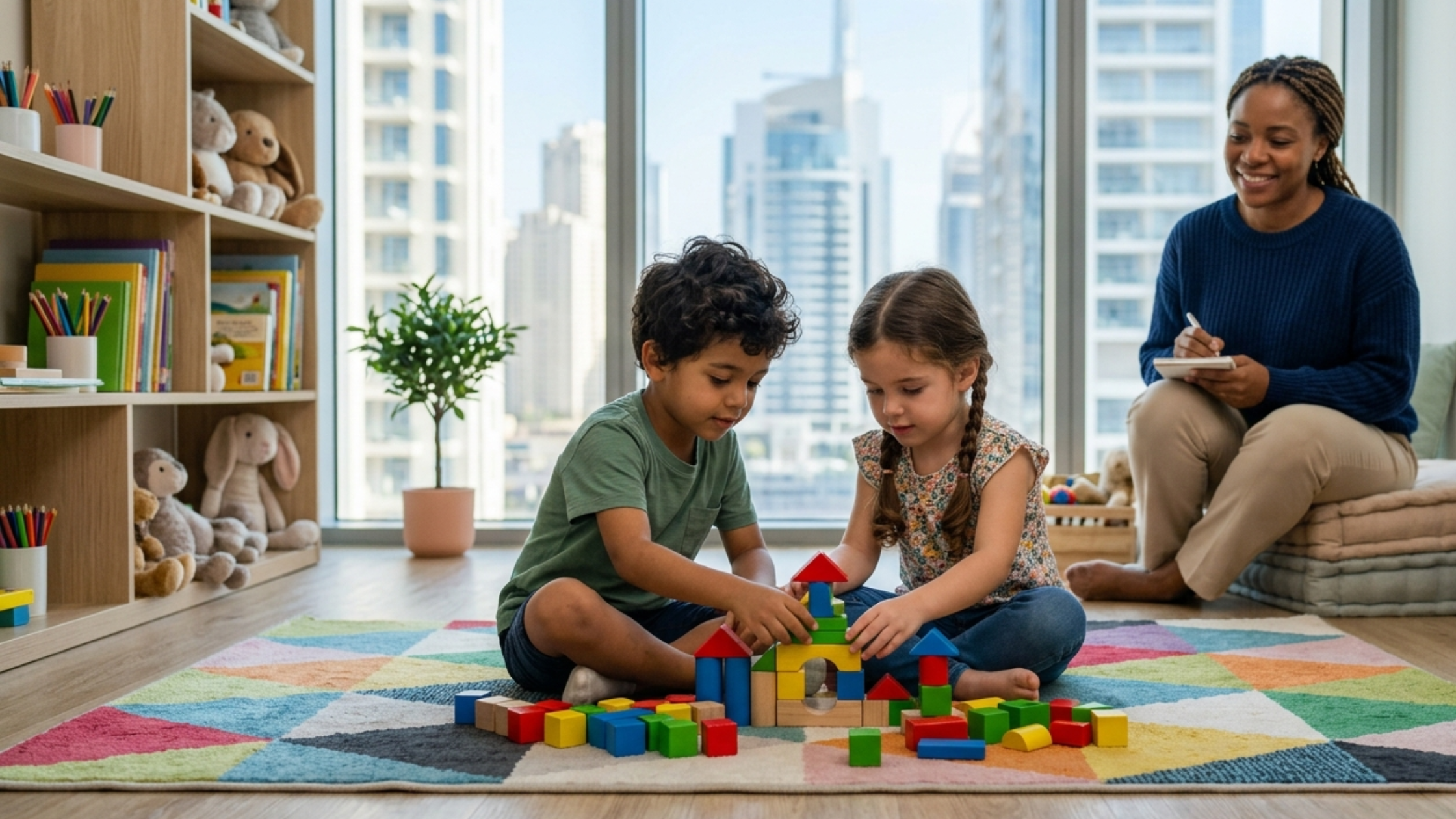
A child who loves building will talk more freely while building with a peer than in any structured social skills exercise. That is where we start.
Side by Side Before Face to Face
For many children with autism, direct face to face interaction is the most demanding form of social engagement. Eye contact, reciprocal conversation, and the need to respond in real time all at once is a significant load.
Parallel play, which means playing alongside another child without directly interacting, is a meaningful step toward connection and one that is often undervalued. Two children sitting near each other, doing the same activity, builds comfort with proximity. It creates the conditions for interaction to emerge naturally, without pressure.
NeuroCore therapists are trained to recognise and celebrate these quieter forms of social engagement, not just the more obvious ones. A child who moves closer to a peer during an activity, or who shows a toy to another child without prompting, is doing something socially significant even if it does not look like what we usually picture when we think of friendship.
What Parents Can Do at Home
You do not need a formal social skills programme to support your child's social development at home.
Keep playdates small and short. One child for twenty to thirty minutes is more productive than a group of four for two hours. Give the children a structured activity to do together rather than leaving the interaction open-ended. Choose activities around your child's interests so they have a natural reason to engage.
Stay nearby but do not run the interaction. Your presence is a safety net. Your involvement in every moment is a barrier. Let things unfold, step in if you need to, but give the children space to find their own way toward each other.
Afterwards, reflect on what went well rather than what did not. Even a ten-minute playdate where two children sat near each other and did not argue is a success worth naming.
How NeuroCore Approaches Social Development
At NeuroCore, we do not run social skills groups that teach children to perform connection. We build the specific skills a child is missing, reduce the barriers that make social situations feel overwhelming, and create real opportunities for genuine interaction in natural settings.
We also work with parents to understand what social connection looks like for their specific child, because it does not always look the same as it does for a neurotypical peer. And that is completely fine.
If you would like to understand what social skill support could look like for your child, our clinical team is happy to talk through that with you.
If you have concerns about your child's development, consult our BCBA or your pediatrician.